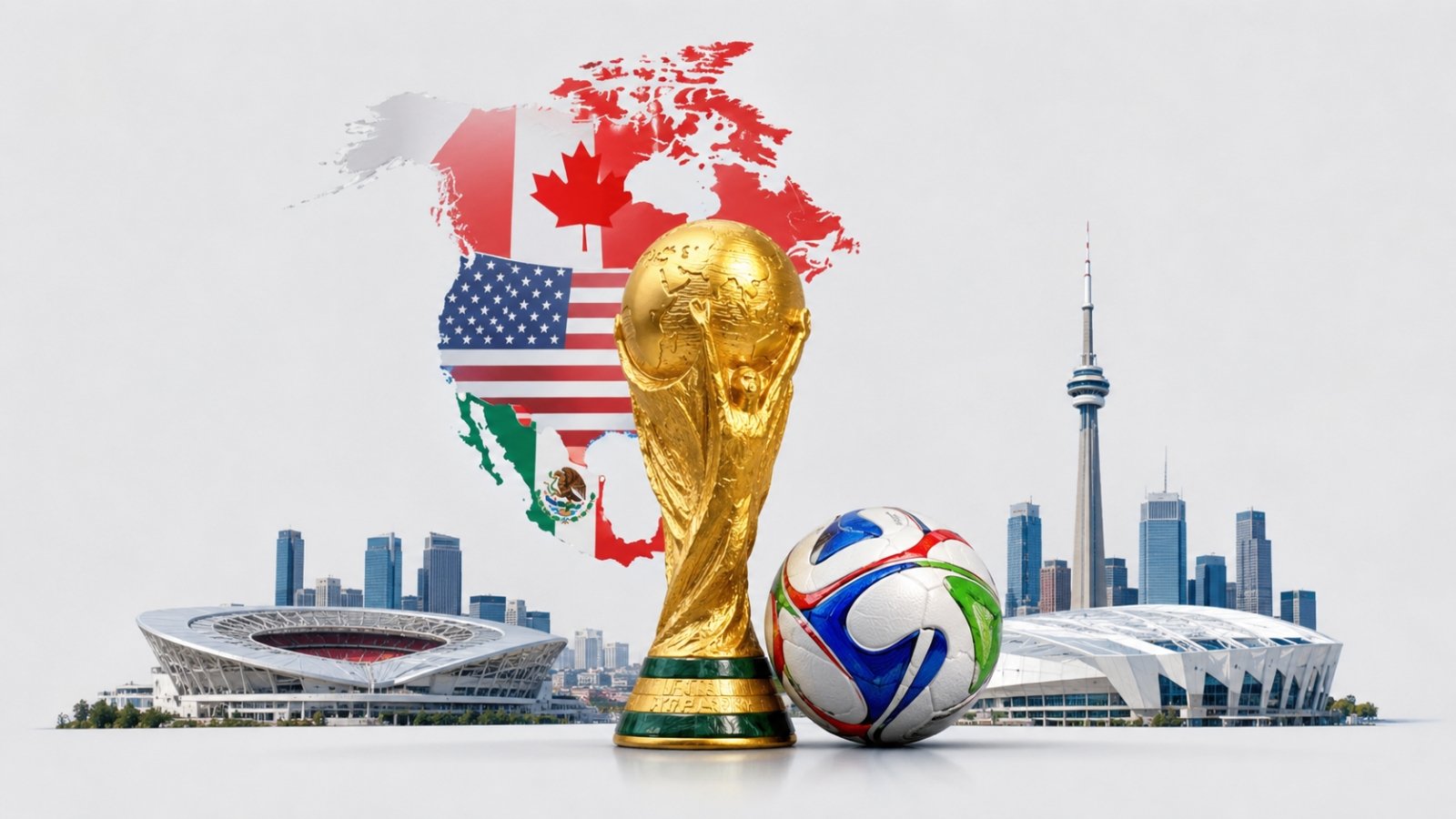
The FIFA World Cup 2026 will be hosted across the United States, Canada, and Mexico — making it the first World Cup held in three countries simultaneously. The tournament runs from June 11 to July 19, 2026, and will feature 48 teams for the first time in World Cup history, up from the previous 32-team format.
The FIFA World Cup is the most-watched sporting event on the planet. The 2022 tournament in Qatar drew an estimated 5 billion viewers across all matches, according to FIFA. The 2026 edition is set to be even bigger — literally. With more teams, more venues, and three host nations, it’s shaping up to be the largest World Cup ever staged.
Whether you’re planning to attend a match, following your national team’s qualification journey, or simply curious about the tournament’s new format, there’s a lot to get across. This guide covers everything you need to know: the host cities, the expanded team format, key dates, and what makes this edition genuinely different from those that came before it.
Table of Contents
Where will the 2026 FIFA World Cup be held?
The 2026 World Cup will be co-hosted by three countries, the United States, Canada, and Mexico. This is the first time three nations have shared hosting duties for a single World Cup tournament.
The United States will host the majority of matches, with 11 cities confirmed as venues. Canada will host in two cities — Toronto and Vancouver — while Mexico will host matches in three cities: Mexico City, Guadalajara, and Monterrey.
Which stadiums are confirmed for the 2026 World Cup?
The 16 confirmed host venues span the three nations as follows:
United States:
- MetLife Stadium, New York/New Jersey (Final venue)
- AT&T Stadium, Dallas
- SoFi Stadium, Los Angeles
- Levi’s Stadium, San Francisco Bay Area
- Arrowhead Stadium, Kansas City
- NRG Stadium, Houston
- Hard Rock Stadium, Miami
- Lincoln Financial Field, Philadelphia
- Gillette Stadium, Boston
- Lumen Field, Seattle
- Soldier Field, Chicago
Canada:
- BC Place, Vancouver
- BMO Field, Toronto
Mexico:
- Estadio Azteca, Mexico City
- Estadio AKRON, Guadalajara
- Estadio BBVA, Monterrey
MetLife Stadium in New Jersey will host the final on July 19, 2026. With a capacity of over 82,000, it will be one of the largest venues ever used for a World Cup final.
When does the 2026 FIFA World Cup start and finish?
The tournament runs from June 11 to July 19, 2026. The group stage is expected to begin in mid-June, with the knockout rounds progressing through late June and July. The final is scheduled for July 19 at MetLife Stadium.
For fans traveling to matches, the geographic spread across three countries means that scheduling and travel logistics will be more complex than in previous tournaments. FIFA has confirmed that group stage games will be assigned to clusters of nearby cities to reduce excessive travel for teams and supporters.
How is the 2026 World Cup format different from previous tournaments?
The 2026 edition marks the biggest structural change to the World Cup since 1998. FIFA has expanded the tournament from 32 teams to 48 teams, adding 16 additional nations to the field.
How does the new 48-team format work?
Under the new format:
- 48 qualified nations are divided into 12 groups of four teams
- The top two teams from each group advance automatically to the round of 32
- The eight best third-placed teams also qualify, completing the 32-team knockout bracket
- The knockout rounds then follow the same single-elimination structure as previous tournaments, ending with the final
The expanded format means more teams get a chance to compete on the world stage — particularly nations from Africa, Asia, and CONCACAF, which have each been allocated additional qualifying spots. According to FIFA’s allocation, Africa will receive nine spots (up from five), while Asia will receive eight (up from four-and-a-half).
The trade-off: Critics have noted that the expanded group stage could produce more low-stakes matches and reduce the pressure on established nations in the early rounds. FIFA’s position is that inclusivity and global reach outweigh those concerns.
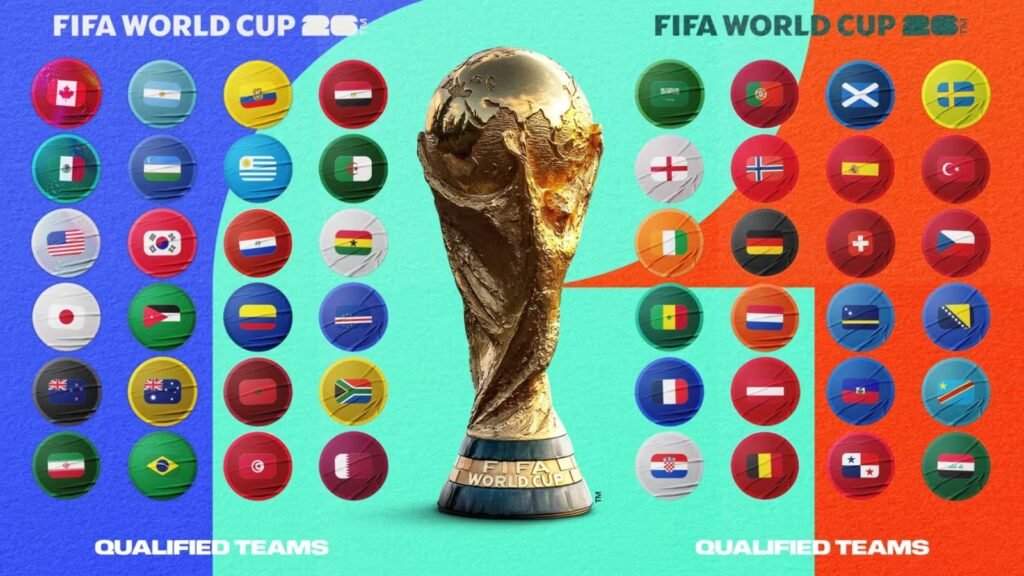
Which teams have qualified for the 2026 FIFA World Cup?
Because the United States, Canada, and Mexico are co-hosts, all three nations receive automatic qualification. Qualification for the remaining 45 spots is determined through continental confederations, with campaigns underway across UEFA (Europe), CONMEBOL (South America), CAF (Africa), AFC (Asia), CONCACAF (North/Central America and Caribbean), and OFC (Oceania).
How many World Cup spots does each continent receive in 2026?
FIFA’s updated allocation for the 48-team tournament is as follows:
- UEFA (Europe): 16 spots
- CAF (Africa): 9 spots
- AFC (Asia): 8 spots
- CONMEBOL (South America): 6 spots
- CONCACAF (North/Central America): 6 spots (including 3 host nations)
- OFC (Oceania): 1 spot
- Inter-confederation playoffs: 2 spots
This marks a significant increase in representation for Africa and Asia, reflecting FIFA’s stated goal of making the World Cup more globally representative.
What makes the 2026 World Cup unique compared to previous editions?
Several factors set this tournament apart.
Three host nations: No World Cup has ever been hosted simultaneously across three sovereign nations. The logistical coordination required between the U.S., Canada, and Mexico is unprecedented, and the fan experience — which may involve crossing international borders between matches — will be unlike anything in the tournament’s history.
The largest field ever: 48 teams means more qualifying nations, more matchups, and more storylines. Nations that have never appeared at a World Cup, or appeared only rarely, may feature prominently.
A return to North America: The last World Cup held in the United States was in 1994 — the most-attended World Cup in history, according to FIFA, with over 3.5 million tickets sold across 52 matches. The 2026 tournament, with 104 matches scheduled, is expected to surpass that record.
Massive stadiums: Many of the U.S. venues are NFL stadiums with capacities between 65,000 and 82,000, which means aggregate attendance figures are likely to be historically high.
As the road to FIFA World Cup 2026 continues, fans will be watching global stars closely, including Neymar and emerging talents like Lamine Yamal. check out our detailed articles on Neymar Net Worth and Lamine Yamal Net Worth.
Frequently Asked Questions about the 2026 FIFA World Cup
When and where is the 2026 World Cup final?
The 2026 World Cup final takes place on July 19, 2026, at MetLife Stadium in East Rutherford, New Jersey, just outside New York City. The stadium has a capacity of over 82,000.
How many matches will be played at the 2026 World Cup?
A total of 104 matches will be played across the tournament — up from 64 in the 32-team format. The increase is a direct result of the expanded 48-team field.
How many teams will qualify for the 2026 World Cup?
48 teams will compete in the 2026 FIFA World Cup. This is an increase from the 32-team format used at every World Cup since 1998.
Which nations automatically qualify as hosts in 2026?
The United States, Canada, and Mexico all receive automatic qualification as co-host nations.
When will World Cup 2026 tickets go on sale?
FIFA has indicated that ticket sales will be conducted in phases, with priority rounds expected to open in 2025. Check FIFA’s official website for the latest ticketing information.
Who won the most recent FIFA World Cup?
Argentina won the 2022 FIFA World Cup in Qatar, defeating France on penalties in the final on December 18, 2022. Argentina will enter the 2026 tournament as defending champions.
Will VAR (Video Assistant Referee) be used at the 2026 World Cup?
FIFA has used VAR (Video Assistant Referee technology) at every World Cup since 2018, and it is expected to continue in 2026. FIFA has also been trialing semi-automated offside technology, which may be deployed in 2026.
What to watch for as 2026 approaches
The 2026 World Cup is still taking shape. Qualification campaigns across six confederations are ongoing, and several of the most competitive storylines — which European nations make it through, whether CONMEBOL’s traditional powers hold their spots, how Africa’s expanded allocation plays out — will unfold through 2025.
A few things worth tracking before the tournament kicks off:
- Qualification results: With 48 spots available, the field will include several nations making their World Cup debut or returning after long absences
- Venue updates: Stadium capacities and match assignments will be confirmed closer to the tournament
- Team news: Squad composition and manager decisions in the 12 months leading up to the tournament often shape how nations perform
- Ticket availability: Given the scale of the event and the size of the North American market, demand is expected to be exceptionally high
The 2026 World Cup represents a genuine shift in the tournament’s scale. More teams, more matches, more host cities, and one of the world’s largest sports markets as its centerpiece — it has all the conditions to be the most-watched and most-attended World Cup on record.
