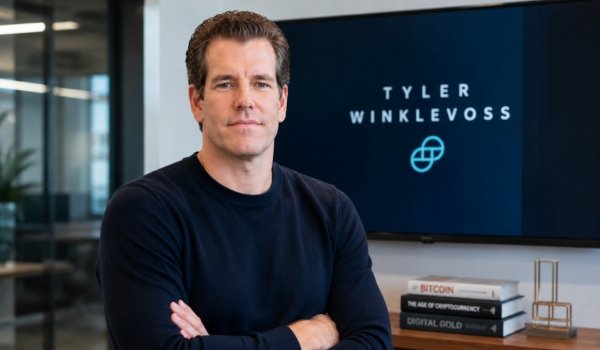
Tyler Winklevoss is an American entrepreneur, Olympic rower, and co-founder of the Gemini cryptocurrency exchange. Alongside his twin brother Cameron Winklevoss, Tyler helped pioneer mainstream Bitcoin adoption after the pair famously sued Mark Zuckerberg over the origins of Facebook. Today, Tyler Winklevoss is one of the most influential figures in the digital asset industry.
Tyler Winklevoss is one of those rare figures whose story reads like a collision between Silicon Valley drama, Olympic ambition, and financial innovation. Most people first heard his name in connection with the Facebook lawsuit—a dispute that played out publicly, eventually made it to film, and ended with a $65 million settlement. But Tyler Winklevoss didn’t stop there. He and his twin brother Cameron took that settlement and placed a bold bet on Bitcoin at a time when most investors still dismissed it as a fringe experiment.
That bet paid off in ways few could have predicted. The brothers went on to found Gemini, one of the most regulated and respected cryptocurrency exchanges in the United States. Tyler Winklevoss now occupies a significant position in the digital finance world—not simply as a wealthy early adopter, but as an entrepreneur who has actively shaped how institutions and everyday investors access crypto markets.
This article explores who Tyler Winklevoss is, how he built his reputation, what Gemini stands for, and why his influence continues to grow in 2025 and beyond. For more tech and finance profiles, visit TechBullion.
Who Is Tyler Winklevoss and What Is His Background?
Tyler Howard Winklevoss was born on August 21, 1981, in Southampton, New York. He and his identical twin brother Cameron grew up in a high-achieving family—their father Howard Winklevoss is an actuary and pension consultant. The twins attended the Phillips Exeter Academy before earning undergraduate degrees from Harvard University, where they studied economics and were standout members of the rowing team.
Their athletic achievements were no small feat. Tyler and Cameron Winklevoss competed in the men’s pair rowing event at the 2008 Beijing Summer Olympics, finishing sixth overall. That level of competitive discipline—years of early mornings, intense physical training, and strategic thinking—gives context to the tenacity they later brought to their business ventures. For more on high-achievers in tech and business, explore content from Link Luminous.
How Did the Facebook Lawsuit Shape Tyler Winklevoss’s Career?
The Facebook dispute is central to understanding Tyler Winklevoss’s public profile. During their time at Harvard, Tyler and Cameron Winklevoss, along with their business partner Divya Narendra, approached Mark Zuckerberg to help build a social networking site called ConnectU. They alleged that Zuckerberg instead used their ideas and code to build Facebook.
The legal battle stretched over several years and was eventually settled in 2008 for approximately $65 million in cash and Facebook stock. The settlement became one of the most talked-about moments in tech history and was dramatized in the 2010 David Fincher film The Social Network, where the Winklevoss twins were portrayed by Armie Hammer.
Rather than fade into the background after the settlement, Tyler Winklevoss used the financial resources and the public attention to build something new. The lawsuit, as contentious and exhausting as it was, ultimately gave him the capital and the platform to pivot toward the next frontier of technology.
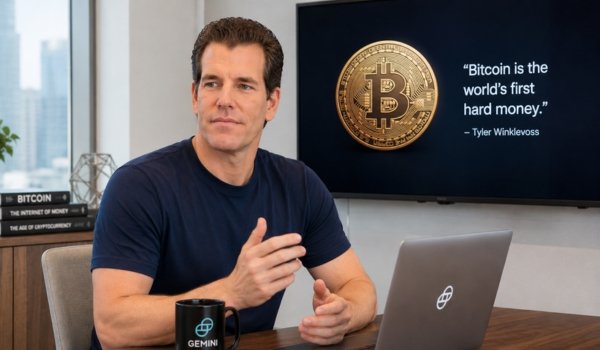
Why Did Tyler Winklevoss Bet on Bitcoin so Early?
Around 2012, Tyler and Cameron Winklevoss began accumulating Bitcoin when its price was still below $10. By April 2013, reports from The New York Times indicated that the brothers had acquired approximately 1% of all Bitcoin in circulation at the time—a staggering position that positioned them as two of the world’s largest individual Bitcoin holders.
Their reasoning was straightforward and, in hindsight, prescient: Bitcoin represented a decentralized, scarce digital asset that could serve as a store of value similar to gold. Tyler Winklevoss was particularly vocal about the idea that Bitcoin’s fixed supply of 21 million coins made it structurally superior to fiat currency as a hedge against inflation.
The brothers were not passive holders. They filed for a Bitcoin ETF (exchange-traded fund) with the U.S. Securities and Exchange Commission (SEC) in 2013, which would have made it far easier for retail investors to gain exposure to Bitcoin without holding the asset directly. The SEC rejected the application in 2017, and again in subsequent attempts, but the filings established the Winklevoss twins as serious advocates for regulatory clarity in the crypto space—long before it was fashionable.
What Is Gemini and How Did Tyler Winklevoss Help Build It?
In 2014, Tyler and Cameron Winklevoss co-founded Gemini, a cryptocurrency exchange headquartered in New York. The name is a nod to their twin identity and to the Gemini constellation—but it also signals the dual mission of the platform: to provide both security and accessibility in digital asset trading.
Gemini set itself apart by pursuing regulatory compliance from the very beginning. The exchange became a New York State Department of Financial Services (NYDFS) licensed trust company, which meant it operated under strict capital reserve, cybersecurity, and compliance requirements. This regulatory posture attracted institutional clients and helped build consumer trust during a period when crypto exchanges were frequently associated with hacks, fraud, and opacity.
The platform grew to offer a wide range of products: spot trading, a regulated stablecoin called Gemini Dollar (GUSD), crypto custody services, a retail app, and a credit card that rewards purchases with Bitcoin. By positioning Gemini as the “regulated” exchange, Tyler Winklevoss helped push the entire industry toward greater accountability.
What Is Tyler Winklevoss Net Worth and How Did He Build His Wealth?
Tyler Winklevoss’s net worth is difficult to pin down precisely because a large portion of it is tied to volatile crypto assets. At Bitcoin’s peak prices in 2021, several financial publications estimated the combined Winklevoss fortune at over $5 billion, making both brothers billionaires. That figure has fluctuated with crypto market cycles.
His wealth comes from several streams: the original Facebook settlement, early Bitcoin holdings, equity in Gemini, and various crypto investments made through their venture activities. Tyler and Cameron Winklevoss also co-founded Winklevoss Capital, a fund that invests in technology and blockchain startups.
What distinguishes Tyler Winklevoss from many crypto-rich individuals is his ongoing operational role. He continues to lead Gemini alongside Cameron, actively shaping product direction, regulatory strategy, and public advocacy for the crypto industry.
What Challenges Has Tyler Winklevoss Faced in the Crypto Industry?
The path has not been without turbulence. Gemini faced significant scrutiny following the collapse of several high-profile crypto firms in 2022, most notably FTX. Gemini’s “Earn” product, which offered yield on crypto deposits through a partnership with the lending firm Genesis Global Capital, was halted in November 2022 after Genesis froze withdrawals. This left approximately 340,000 Gemini Earn users unable to access their funds.
The fallout led to a public dispute between Tyler and Cameron Winklevoss and Barry Silbert, the founder of Digital Currency Group (Genesis’s parent company). Cameron Winklevoss published open letters demanding repayment for affected users. The situation eventually resulted in legal proceedings and regulatory scrutiny from the SEC, which charged both Gemini and Genesis with offering unregistered securities.
The episode was a significant reputational test. It demonstrated that even well-regarded exchanges are not immune to the risks created by counterparty exposure across the crypto ecosystem.
What Is Tyler Winklevoss Focused on Today?
Tyler Winklevoss remains an active voice in the cryptocurrency space. He continues to advocate for clearer U.S. crypto regulation, the approval of Bitcoin ETFs, and the broader adoption of digital assets by institutional investors. He is a frequent commentator on social media and in interviews, often framing Bitcoin as a generational financial asset.
The approval of spot Bitcoin ETFs in the United States in January 2024—granted by the SEC to products from BlackRock, Fidelity, and others—was a milestone that Tyler Winklevoss had worked toward for over a decade. While Gemini’s own ETF application was not among those approved in that wave, the regulatory shift validated a core thesis he had argued since 2013.
Frequently Asked Questions About Tyler Winklevoss
Who is Tyler Winklevoss and what is he known for?
Tyler Winklevoss is an American entrepreneur, Olympic rower, and cryptocurrency investor best known for co-founding Gemini, a regulated U.S. cryptocurrency exchange. He is also recognized for his legal dispute with Mark Zuckerberg over the origins of Facebook.
How much Bitcoin does Tyler Winklevoss own?
Tyler and Cameron Winklevoss are reported to have purchased approximately 1% of all Bitcoin in circulation around 2012–2013, according to a 2013 New York Times report. The precise current holdings have not been publicly disclosed.
What is the Gemini cryptocurrency exchange?
Gemini is a U.S.-based cryptocurrency exchange co-founded by Tyler and Cameron Winklevoss in 2014. Gemini operates as a licensed trust company under New York State law and offers services including spot trading, crypto custody, and the Gemini Dollar stablecoin.
Did Tyler Winklevoss go to the Olympics?
Yes. Tyler Winklevoss and his twin brother Cameron competed in the men’s pair rowing event at the 2008 Beijing Summer Olympics, where they placed sixth.
What happened with the Gemini Earn controversy?
Gemini Earn was a yield product that partnered with Genesis Global Capital. When Genesis froze withdrawals in November 2022 following market turmoil, approximately 340,000 Gemini Earn users were unable to access their funds. The situation led to legal disputes and SEC enforcement action.
