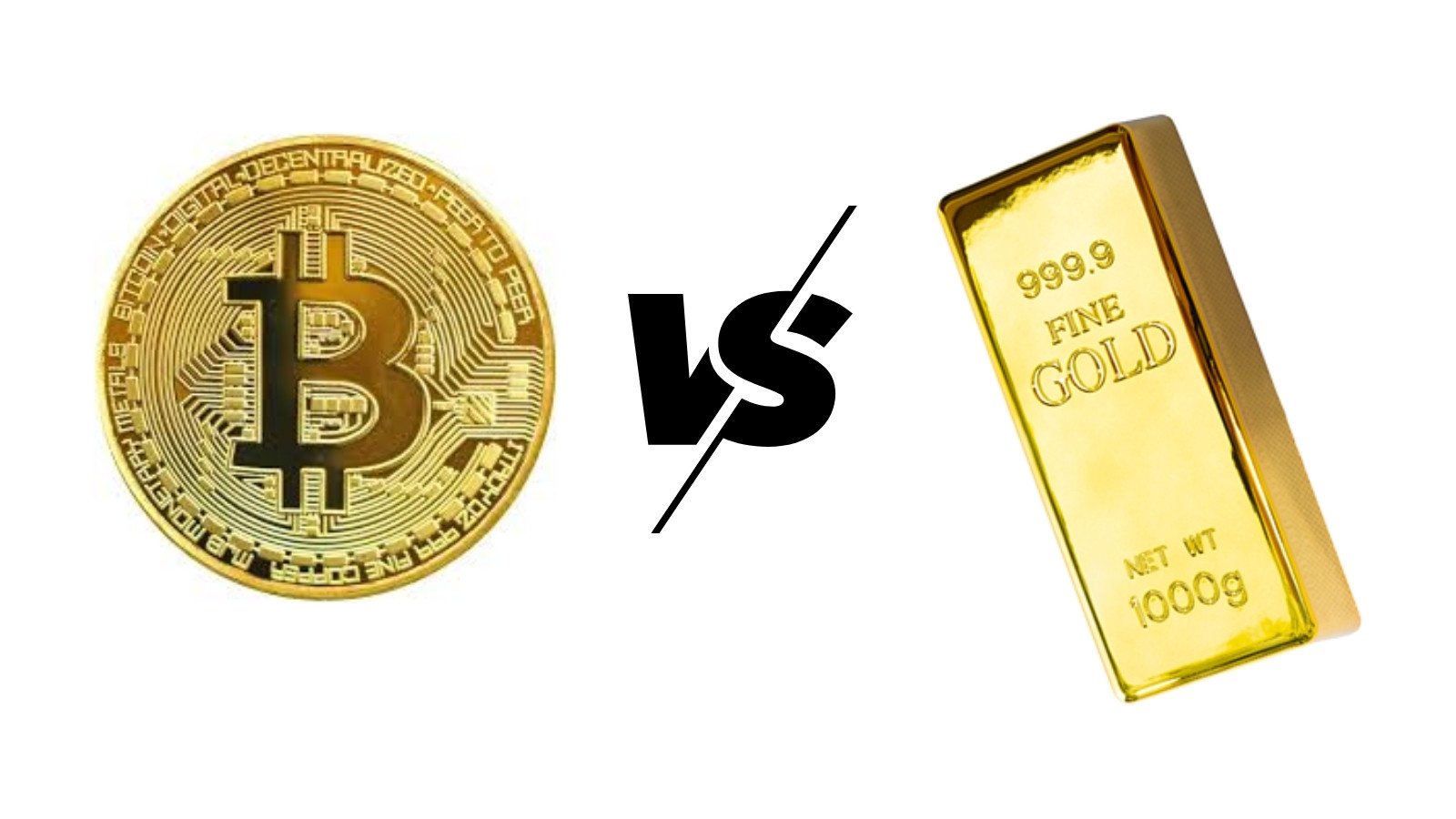
Bitcoin and gold are both popular stores of value, but they serve different purposes. Gold offers centuries of stability and low volatility, making it ideal for conservative investors. Bitcoin offers higher growth potential and portability, but comes with significant price swings. The right choice depends on your risk tolerance and investment timeline.
Few debates in personal finance are as heated as the one between Bitcoin and gold. Both are treated as alternatives to traditional currencies. Both attract investors who want to protect their wealth from inflation or economic uncertainty. And both have passionate, loyal communities who will argue their case at length.
But they are fundamentally different assets—with different histories, risk profiles, and use cases. Understanding those differences is key to making a smart investment decision.
This post breaks down the Bitcoin vs gold debate clearly and objectively, covering everything from historical performance and volatility to inflation hedging and long-term storage. By the end, you’ll have a clearer picture of which asset suits your financial goals—or whether a combination of both makes the most sense.
Table of Contents
What Makes Bitcoin and Gold “Safe Haven” Assets?
A safe haven asset is one that tends to retain or increase in value during periods of economic stress. Gold has held this reputation for thousands of years. Bitcoin, first introduced in 2009 by the pseudonymous Satoshi Nakamoto, has more recently been pitched as a digital equivalent—sometimes called “digital gold.”
Both share a few key characteristics:
- Scarcity: Gold has a finite supply determined by how much exists in the Earth’s crust. Bitcoin has a hard cap of 21 million coins, enforced by its underlying code.
- Decentralization: Neither is controlled by a central bank or government.
- Global demand: Both are traded worldwide, 24 hours a day.
These similarities are real, but they mask some significant differences in behavior.
How Have Bitcoin and Gold Performed Historically?
Gold has been a reliable store of value for millennia. Over the past 50 years, gold has generally kept pace with inflation and preserved purchasing power, even during periods of economic turbulence like the 2008 financial crisis, when gold prices surged by roughly 25%.
Bitcoin’s track record is far shorter but dramatically more volatile. Since its launch in 2009, Bitcoin has experienced multiple boom-and-bust cycles. It climbed from near zero to nearly $69,000 in November 2021, before falling to around $16,000 by late 2022. By early 2024, it had rebounded above $60,000.
Those numbers tell two different stories. Gold rewards patience and consistency. Bitcoin rewards timing—and punishes it just as easily.
Which Asset Is More Volatile?
Bitcoin is significantly more volatile than gold. According to data from multiple financial analysts, Bitcoin’s annualized volatility has historically ranged between 60% and 100%, compared to gold’s relatively stable range of 10% to 20%.
That volatility cuts both ways. It creates opportunities for outsized gains, but also exposes investors to sharp, rapid losses. A 50% decline in a single year—something Bitcoin has experienced more than once—would be extraordinary for gold.
For investors with a low risk tolerance or a shorter investment horizon, that level of price swings can be difficult to stomach. For those with a higher risk appetite and a long time horizon, the potential upside may justify the turbulence.
Does Bitcoin or Gold Do a Better Job of Hedging Against Inflation?
Gold’s role as an inflation hedge is well-established. When the purchasing power of fiat currencies declines, gold tends to hold its value. During the high-inflation period of the 1970s, gold prices increased dramatically, providing real protection for investors.
Bitcoin’s effectiveness as an inflation hedge is less clear-cut. Proponents argue that its fixed supply makes it structurally resistant to inflation. Critics point out that during the high-inflation environment of 2022, Bitcoin’s price fell sharply—suggesting that, at least in the short term, Bitcoin behaves more like a speculative risk asset than a stable inflation hedge.
The honest assessment: gold has a stronger track record as an inflation hedge. Bitcoin may develop that reputation over time, but it hasn’t yet proven it consistently.
How Do Bitcoin and Gold Compare for Long-Term Storage?
This is one area where Bitcoin has a clear practical advantage. Storing physical gold requires secure vaults, insurance, and logistical planning. Moving large amounts of gold across borders is slow, expensive, and heavily regulated.
Bitcoin, being a digital asset, can be stored on a hardware wallet the size of a USB drive and transferred anywhere in the world in minutes. For investors in countries with unstable governments or currency controls, this portability is a meaningful benefit.
That said, Bitcoin’s digital nature introduces its own risks. Lost private keys mean lost Bitcoin—permanently. Hardware failure, phishing attacks, and exchange hacks are real threats. Gold, sitting in a vault, doesn’t get hacked.
Who Should Choose Bitcoin, and Who Should Choose Gold?
The right choice depends on what you’re trying to achieve.
Choose gold if:
- You prioritize capital preservation over growth
- You’re within 10 years of retirement
- You want a proven inflation hedge with low volatility
- You’re uncomfortable with digital assets or cryptocurrency markets
Choose Bitcoin if:
- You’re comfortable with high volatility and can tolerate significant drawdowns
- You have a long investment horizon (10+ years)
- You believe in the long-term adoption of decentralized digital currencies
- You want easy, borderless portability for your wealth
Consider holding both if:
- You want diversification across different types of alternative assets
- You want the stability of gold with a smaller speculative position in Bitcoin
- You’re hedging against multiple types of risk simultaneously
Many financial advisors suggest that Bitcoin allocations in a diversified portfolio remain small—often cited in the range of 1% to 5%—given its volatility relative to other assets.
The Bottom Line: Bitcoin or Gold?
Gold and Bitcoin aren’t really competing for the same role in your portfolio—they just tend to get framed that way. Gold is a battle-tested store of value with a multi-century track record of preserving wealth. Bitcoin is a high-risk, high-reward digital asset that remains in the early stages of mainstream adoption.
For most investors, the question isn’t which one to choose—it’s how much of each fits your personal risk profile. A modest Bitcoin allocation alongside a more substantial gold position gives you exposure to both the stability of a proven asset and the upside potential of an emerging one.
Before making any investment decision, consult a licensed financial advisor who can assess your individual circumstances.
Frequently Asked Questions
Is Bitcoin better than gold as an investment?
Bitcoin has outperformed gold significantly over the past decade, but with far greater volatility. Bitcoin is better suited to investors with a high risk tolerance and long time horizon. Gold is generally more appropriate for conservative investors focused on capital preservation.
Can Bitcoin replace gold as a store of value?
Bitcoin shares some characteristics with gold—scarcity, decentralization, and global demand—but has not yet demonstrated the same long-term stability. Bitcoin may complement gold as a store of value, but most financial analysts don’t currently view it as a direct replacement.
How much of my portfolio should I allocate to Bitcoin vs gold?
Allocation depends on your risk tolerance and financial goals. A common guidance from financial advisors is to limit Bitcoin to 1%–5% of a diversified portfolio, while gold allocations typically range from 5%–15%, depending on overall market exposure.
Which is safer: Bitcoin or gold?
Gold is widely considered the safer asset due to its low volatility, long track record, and tangible nature. Bitcoin carries significantly higher price risk, counterparty risk, and technical risks such as lost private keys or exchange failures.
Are Bitcoin and gold correlated?
Historically, Bitcoin and gold have shown low correlation, meaning they don’t consistently move in the same direction. This makes holding both potentially useful for diversification, though Bitcoin’s correlation to broader risk assets like equities has increased in recent years.
