

The field of cybersecurity is in constant motion. As technology advances, so do the methods used by those looking to exploit it. Heading into 2025, we are seeing a dramatic shift driven by artificial intelligence, quantum computing, and the changing ways we work and live online. Understanding these cybersecurity trends 2025 is no longer just for IT experts; it’s essential for everyone.
The top cybersecurity trends for 2025 involve the dual-edged sword of Generative AI, the rise of convincing Deepfakes, and the urgent need to prepare for the power of Quantum Computers. These forces are reshaping everything from how we secure our data to the very nature of digital trust.
The Double-Edged Sword: Generative AI in Cybersecurity
Generative AI is the most significant force shaping cybersecurity today. It acts as both a powerful tool for defenders and a dangerous weapon for attackers. This technology can create new content—text, images, code, and more—making it incredibly versatile. For security teams, it can automate threat detection and summarize complex incident reports. For adversaries, it lowers the barrier to entry for creating sophisticated attacks.
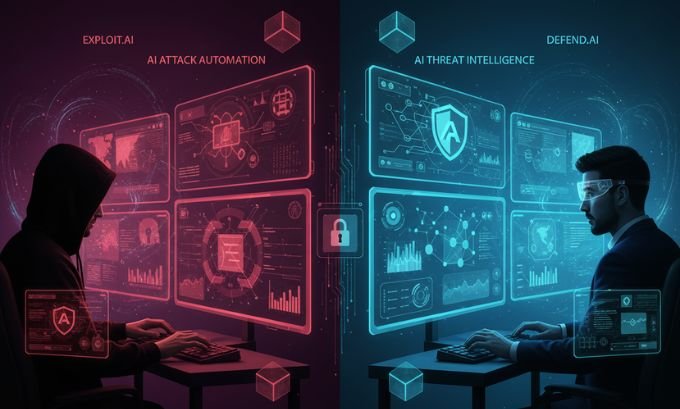
How Attackers are Using Generative AI
Cybercriminals are quickly adopting AI to make their attacks more effective and harder to detect. This is a major focus of the cybersecurity trends for 2025.
AI Phishing: The New Wave of Social Engineering
Gone are the days of spotting phishing emails by their poor grammar and spelling. AI Phishing uses Generative AI to craft highly personalized and context-aware messages. These emails can mimic a company’s specific tone, reference recent public events, or even synthesize information from a target’s social media profile to create a believable lure.
- Real-World Scenario: Imagine an employee receives an email that appears to be from their CEO. The email references a recent company-wide meeting and asks them to urgently review an attached “revised financial forecast” before an upcoming board meeting. The language is perfect, the context is correct, and the sense of urgency is high. This email was created by an AI that scraped company news and the CEO’s public communications. The employee clicks, and malware is installed. One email security firm noted they are seeing “perfectly crafted and legitimate sounding” phishing emails that are far more advanced than previous attempts.
AI-Powered Malware and Exploit Creation
You no longer need to be an expert coder to create malicious software. Attackers can now use Generative AI models to write malware or generate exploit code for known vulnerabilities. They can simply describe the vulnerability in plain language and ask the AI to produce the necessary code.
- Expertise in Action: A 2024 study demonstrated that a popular AI chatbot could generate working exploit code for a described zero-day vulnerability 87% of the time. This means attackers can weaponize new vulnerabilities faster than ever before, dramatically shortening the window for defenders to apply patches. One major online retailer reported a 700% increase in attacks over six months, attributing a large portion of this surge to the use of Generative AI by attackers.
What I Like: AI as a Defensive Tool
On the positive side, Generative AI offers incredible potential for strengthening cybersecurity defenses.
- Threat Intelligence at Speed: AI can analyze vast amounts of data from security logs, network traffic, and threat feeds to identify patterns that a human analyst might miss.
- Automated Summaries: When a security incident occurs, AI can generate a concise summary of the event, including all indicators of compromise. This helps teams get up to speed quickly and ensures a smooth handoff between shifts.
- Natural Language Queries: Security analysts can ask questions in plain English, like “Show me all unusual outbound network traffic from the finance department’s servers in the last 24 hours,” and get an immediate, actionable response.
Areas for Improvement: The Risks of AI in Defense
While promising, deploying AI for defense comes with its own set of challenges.
- Hallucinations: AI models can still “hallucinate” or generate incorrect information. An AI recommending the wrong response to a security breach could be catastrophic. This is why human oversight remains critical.
- Prompt Injection: This is considered the top threat to large language models by the OWASP Foundation. An attacker can manipulate an AI’s prompts to make it bypass its safety protocols or reveal sensitive data.
- Shadow AI: The rise of unauthorized AI deployments, or Shadow AI, creates a new attack surface. An employee might use an unapproved AI tool for work, inadvertently feeding it proprietary company data. This data could then be leaked or used to train other models, creating a significant security risk.
The Trust Crisis: Deepfakes and Information Integrity
Deepfakes—AI-generated videos or audio clips that realistically mimic a real person—are no longer a futuristic concept. They are a present-day threat and a critical part of the cybersecurity trends for 2025. The technology has become so advanced that it can create convincing fakes used for fraud, misinformation, and reputational damage.
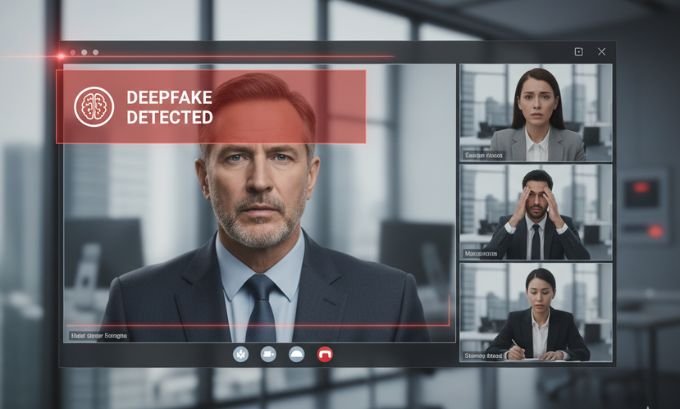
Deepfake Attacks in the Wild
The impact of Deepfakes is already being felt across business, politics, and even our legal system.
- Corporate Fraud: In a widely reported incident, a finance worker at a multinational firm was tricked into transferring $25 million after a video call with who he thought was his Chief Financial Officer. The “CFO” and other “colleagues” on the call were all Deepfakes. The employee followed the instructions, believing he was acting on legitimate orders.
- Political Disruption: During the 2024 U.S. election primaries, a deepfake audio recording mimicking President Joe Biden’s voice was used in robocalls to discourage people from voting. This highlights the potential for Deepfakes to interfere with democratic processes.
- Legal Challenges: How can a court trust video evidence when the defense can plausibly claim it’s a deepfake? Conversely, how can a defendant prove their innocence if a deepfake video implicates them? Our legal frameworks have not yet caught up to this technology.
Defending Against Deepfakes
Combating Deepfakes requires a multi-layered approach involving both technology and human awareness.
Deepfake Detection Technologies
| Method | How It Works | Limitations |
|---|---|---|
| Digital Watermarking | Embeds an invisible, secure signal into original content to verify its authenticity later. | Not effective for content created before the watermark was applied. |
| Behavioral Analytics | AI models are trained to spot subtle, unnatural movements in videos, like unusual blinking patterns or awkward facial expressions. | Detection models must constantly be updated as deepfake technology improves. |
| Provenance Tracking | Uses blockchain or similar technologies to create an immutable record of a piece of content’s origin and any edits made to it. | Requires widespread adoption to be truly effective. |
What I Like: Increased Awareness
The high-profile nature of deepfake incidents has raised public and corporate awareness.
- Training Programs: More organizations are implementing training programs to educate employees on how to spot potential Deepfakes and what to do if they suspect one.
- Verification Protocols: Companies are strengthening their financial transaction protocols, requiring multi-person or out-of-band verification for large fund transfers, rather than relying on a single email or video call.
Areas for Improvement: The Arms Race
The biggest challenge is that deepfake generation technology is improving faster than detection technology.
- Accessibility: Open-source tools make it possible for individuals with limited technical skills to create basic Deepfakes.
- Plausible Deniability: The mere existence of Deepfakes allows bad actors to cast doubt on genuine evidence, a phenomenon known as the “liar’s dividend.”
The Quantum Threat: Preparing for a New Era of Cryptography
While Generative AI is the threat of today, Quantum Computers represent the looming threat of tomorrow. These powerful machines operate on the principles of quantum mechanics, allowing them to solve certain problems exponentially faster than classical computers. One of those problems is breaking the encryption that protects nearly all of our digital information.
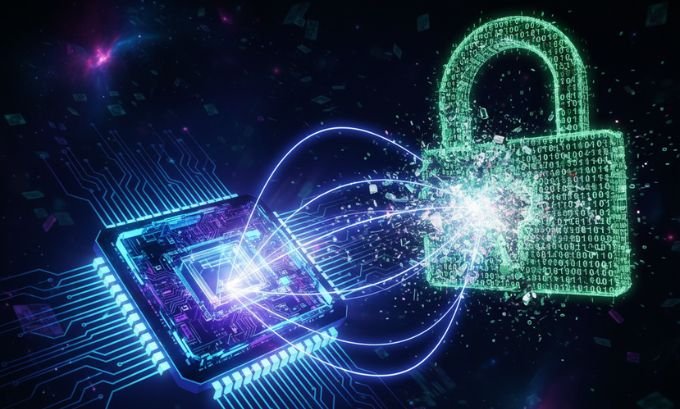
Why Quantum Computers Are a Security Risk
Modern encryption relies on mathematical problems that are too complex for today’s computers to solve in a reasonable timeframe. However, a sufficiently powerful quantum computer could break these algorithms almost instantly.
- Harvest Now, Decrypt Later: This is the most immediate threat. Adversaries, particularly nation-states, are believed to be collecting and storing vast amounts of encrypted data today. They are waiting for the day a quantum computer becomes available to decrypt it all. This means data that needs to remain secret for decades—like national security secrets, intellectual property, or personal health records—is already at risk.
The development of fault-tolerant Quantum Computers might be five, ten, or more years away. However, the timeline is uncertain, and the migration to new cryptographic standards takes years. This makes acting now a critical component of the cybersecurity trends for 2025.
The Solution: Quantum-Safe Cryptography
To counter this threat, the world is moving toward Quantum-Safe Cryptography (QSC), also known as Post-Quantum Cryptography (PQC). These are new encryption algorithms designed to be secure against attacks from both classical and Quantum Computers.
- NIST’s Role: The U.S. National Institute of Standards and Technology (NIST) has been leading a global effort to standardize these new algorithms. After years of testing, they have selected a suite of algorithms for standardization, and organizations are now beginning the long process of migrating to them.
What I Like: Proactive Standardization
The global cybersecurity community is not waiting for a disaster.
- Global Collaboration: The NIST PQC standardization process involved cryptographers and researchers from all over the world working together to find the most secure solutions.
- Clear Roadmap: NIST has provided a clear set of algorithms and a roadmap for implementation, giving organizations a path forward.
Areas for Improvement: Slow Adoption
Despite the clear and present danger, many organizations are lagging in their transition.
- Complexity: Migrating an entire organization’s cryptographic infrastructure is a massive and complex undertaking. It involves updating software, hardware, and protocols across the board.
- Lack of Urgency: Because the “quantum threat” can feel distant, many organizations have not yet made it a priority, leaving their long-term data vulnerable to “harvest now, decrypt later” attacks.
Other Key Cybersecurity Trends for 2025
Beyond AI and quantum threats, several other trends will define the cybersecurity landscape in the coming year.
The Growing Risk of Open-Source Code
Modern software development relies heavily on open-source code. Developers use these free libraries to avoid reinventing the wheel and to speed up development. However, this convenience comes with risks.
- Expertise in Action: A 2024 report from Synopsys found that 96% of scanned codebases contained open-source code, and 84% of those had at least one known vulnerability. A single vulnerability in a popular open-source library can expose thousands of applications to attack. This makes robust software composition analysis (SCA) tools, which scan for and identify vulnerabilities in open-source components, more critical than ever.
If you want to learn more about Cybersecurity trends for 2025, you can visit mindjournal.co or gogonihon.jp.net
The Need to Innovate Multi-Factor Authentication (MFA)
Multi-Factor Authentication (MFA) is a cornerstone of modern security, but not all MFA is created equal. Many services still rely on SMS-based codes for verification. This method is vulnerable to SIM-swapping attacks and is no longer considered a secure best practice. The trend is moving toward more secure, app-based authenticators, hardware keys, and passkeys, which offer stronger protection.
The Rise of DDoS-for-Hire Services
Distributed Denial-of-Service (DDoS) Attacks, which flood a server with traffic to knock it offline, are increasing in frequency and scale. Cloudflare reported blocking 20.5 million DDoS attacks in the first quarter of 2025 alone, a 358% year-over-year increase. The rise of DDoS-for-hire services on the dark web makes it cheap and easy for anyone to launch a disruptive attack, increasing the demand for professional DDoS mitigation services.
Frequently Asked Questions (FAQ)
1. What is the number one cybersecurity threat for 2025?
The biggest threat is the malicious use of Generative AI. This includes advanced AI Phishing, automated malware creation, and the development of convincing Deepfakes for fraud and misinformation campaigns.
2. Is my data safe from quantum computers right now?
Your data encrypted with current standards is safe from being decrypted today. However, it is not safe from being stolen and stored for decryption later, once a powerful Quantum Computer is built. This “harvest now, decrypt later” threat is why migrating to Quantum-Safe Cryptography is urgent.
3. What is Shadow AI and why is it a risk?
Shadow AI refers to the use of AI applications and tools by employees without the company’s knowledge or approval. It’s a risk because employees might input sensitive corporate data into these unsecured tools, leading to data leaks and creating a new, unmanaged attack surface.
4. How can I protect myself from AI phishing attacks?
Be more skeptical than ever of unsolicited emails, even if they seem legitimate. Verify any unusual requests, especially those involving financial transactions or sensitive data, through a different communication channel, like a phone call to a known number. Implement advanced email security solutions that use AI to detect phishing attempts.
5. What is the difference between MFA and passkeys?
Traditional MFA adds a second step after your password, like a code from an app. Passkeys are a newer technology designed to replace passwords altogether. They use cryptographic principles to let you sign in using your device’s biometric scanner (face or fingerprint) or PIN, offering a more secure and user-friendly experience.
6. Are DDoS attacks still a major problem?
Yes, DDoS attacks are a bigger problem than ever. They are increasing in frequency, size, and sophistication. The availability of cheap “DDoS-for-hire” services means that any organization with an online presence is a potential target.
7. Is open-source software safe to use?
Open-source software is a powerful tool, but it must be used with caution. It’s crucial to have processes in place to scan for vulnerabilities in open-source components and to apply patches quickly when they become available. Assuming open-source code is inherently secure is a dangerous mistake.
Whether you’re looking to purchase quality products online in Japan at TokyoMart.store or need expert help growing your brand’s digital presence with LinkLuminous.com, these two platforms offer trusted solutions for shoppers and business owners alike.
Conclusion: Navigating the Future of Cybersecurity
The cybersecurity trends for 2025 paint a picture of a rapidly evolving and increasingly complex threat landscape. The rise of Generative AI and the approaching reality of Quantum Computers are forcing a fundamental rethinking of how we approach digital security.
Staying secure in this new era requires a proactive and vigilant mindset. Organizations and individuals must prioritize education, adopt next-generation security tools, and begin the necessary migrations to stronger authentication and cryptographic standards. The future of cybersecurity belongs to those who prepare for it today.
About the Author
This article was written by a team of cybersecurity analysts and content specialists with over a decade of combined experience in threat research, data analysis, and security education. Our expertise is rooted in hands-on incident response, security architecture design, and a deep understanding of the technologies shaping the future of digital safety. We are committed to providing clear, accurate, and actionable information to help readers navigate the complex world of cybersecurity.
