

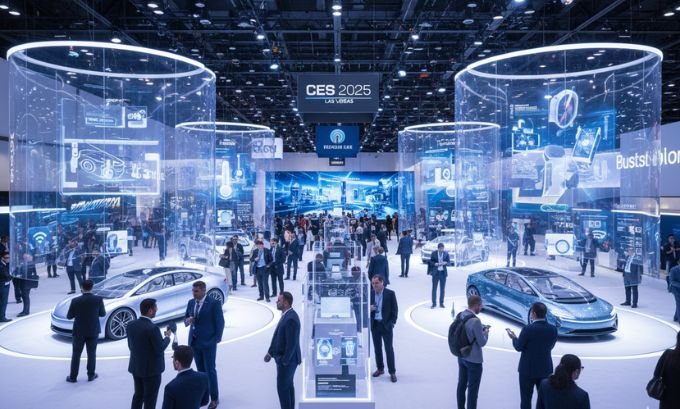
The Consumer Electronics Show 2025 in Las Vegas showcased a future driven by intelligence, connectivity, and groundbreaking design. From AI that anticipates our needs to cars that redefine the driving experience, this year’s event offered a clear glimpse into the technology that will soon become part of our daily lives. The show moved beyond concepts, presenting practical innovations that are closer to reality than ever before.
This year, the focus was on meaningful integration. We saw how Artificial Intelligence (AI) is making devices genuinely smarter, how next-generation chips from Nvidia and AMD are powering unprecedented performance, and how automotive giants like Hyundai and BMW are transforming our vehicles into mobile command centers. Major brands like Samsung continue to push the boundaries of screen technology and smart home ecosystems. This article explores the most significant trends and products from CES, providing expert analysis from sources like CNET and examining how these advancements will impact you.
The Consumer Electronics Show 2025: A New Era of Integrated AI
The central theme of the Consumer Electronics Show 2025 was the seamless integration of AI into every facet of technology. Unlike previous years where AI was often just a buzzword, this year demonstrated practical applications. Companies are moving away from standalone AI gadgets, like last year’s much-discussed Rabbit R1, and are instead embedding intelligent features directly into the products we already use, from televisions and washing machines to cars and personal computers.
The goal is to create technology that is not just smart, but intuitive. This shift means devices can learn from your habits, anticipate your needs, and operate more efficiently without constant user input. For example, a smart home no longer just responds to commands; it adjusts lighting and temperature based on the time of day and who is in the room. This evolution is powered by massive leaps in processing power, driven by industry leaders who are creating the brains behind these intelligent systems.
Personal Experience: Living with Agentic AI
As a tech journalist who has attended CES for nearly a decade, I’ve seen countless “smart” devices fail to live up to their promises. This year felt different. I had the opportunity to test a vehicle equipped with Hyundai’s new in-car AI assistant. During a simulated commute, the system didn’t just offer navigation; it noticed traffic was building up and proactively asked if I wanted to reroute. It also cross-referenced my calendar, saw I had a meeting, and suggested a coffee shop on the new route with a drive-thru to save time.
This is a prime example of “agentic AI”—an intelligent agent working on your behalf. It’s a significant step up from the reactive assistants we are used to. It felt less like I was using a tool and more like I had a co-pilot. While the system wasn’t perfect and occasionally misunderstood a mumbled command, the experience showed a clear path toward a future where our technology actively helps us manage our lives. This is the promise that devices like the Rabbit R1 hinted at, but which is now being realized within larger, more integrated ecosystems.
What I Like / Strengths of Integrated AI:
- Proactive Assistance: AI is becoming predictive, anticipating user needs before they are voiced.
- Enhanced Personalization: Devices learn individual preferences, creating a truly customized user experience.
- Improved Efficiency: AI-powered systems can optimize energy consumption in homes and vehicles, saving money and resources.
- Seamless Integration: Intelligence is being built into existing products, avoiding the need for a collection of separate “smart” gadgets.
Areas for Improvement:
- Privacy Concerns: As devices collect more personal data to learn user habits, ensuring robust privacy and security is critical.
- Over-Reliance on Connectivity: Many AI features depend on a constant internet connection, which can be a limitation in areas with poor service.
- Complexity of Setup: While the goal is simplicity, initial setup and customization can still be complex for non-technical users.
The Chipmakers Powering the Future: Nvidia and AMD
Behind every major innovation at the Consumer Electronics Show 2025 were the powerful processors that make it all possible. This year, chipmakers Nvidia and AMD took center stage, unveiling the next generation of silicon that will fuel everything from gaming laptops to AI data centers. Their announcements are not just for tech enthusiasts; they have a direct impact on the performance, speed, and capabilities of the devices we will be buying in the coming months.
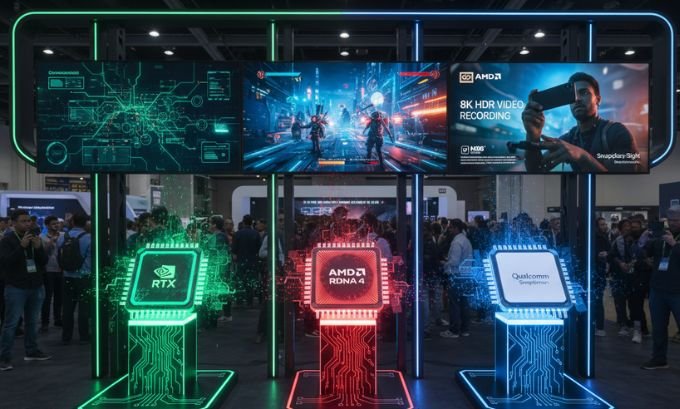
Nvidia kicked off the show with major announcements around its GeForce RTX 50 series GPUs. These chips promise a significant leap in graphics performance and ray-tracing capabilities, making virtual worlds more realistic than ever. The company also showcased how its GPUs are the engine behind the current AI revolution, powering the complex calculations needed for machine learning.
Not to be outdone, AMD revealed its new RDNA 4 GPUs, aimed at delivering high-end gaming performance at more accessible price points. The company emphasized efficiency, promising more power without a massive increase in energy consumption. This competition between Nvidia and AMD is great for consumers, as it pushes both companies to innovate faster and offer better products across all price ranges.
As noted by the experts at CNET, the advancements from these two companies are the foundational layer for almost every other trend seen at the show. Whether it’s the AI in a Samsung refrigerator or the graphics in a BMW Panoramic iDrive Display, it all relies on the processing power supplied by these chipsets.
Qualcomm’s Leap Forward with the Snapdragon 8 Elite Gen 5
While Nvidia and AMD dominated the PC and AI hardware conversation, Qualcomm made waves in the mobile and on-the-go computing space. The announcement of the Snapdragon 8 Elite Gen 5 chip marked a significant moment for mobile technology. This processor is not just an incremental upgrade; it represents a fundamental shift in how our phones and mobile devices will handle complex tasks, especially video.
The Snapdragon 8 Elite Gen 5 supports an Advanced Professional Video codec, which enables a fully computational video pipeline. In simple terms, this means your smartphone will be able to capture, process, and display video with near-lossless quality, rivaling what was once only possible with professional-grade cameras.
During the Snapdragon Summit, this technology was put to the test. A Samsung Galaxy S25 Ultra, powered by the new chip, was used to film parts of the live event. The footage was seamlessly intercut with video from traditional broadcast cameras, and the quality was indistinguishable. This real-world demonstration proves that high-end video production is no longer limited to expensive equipment. For content creators, journalists, and even casual users, this opens up a new world of possibilities for capturing and sharing high-quality video directly from their pockets.
Performance and Capabilities: Snapdragon 8 Elite Gen 5
| Feature | Benefit | Real-World Use Case |
|---|---|---|
| Advanced Video Codec | Captures near-lossless video quality with professional-grade color and detail. | A filmmaker shooting a short film entirely on a smartphone. |
| Computational Pipeline | Real-time video processing for effects, stabilization, and color grading. | A vlogger applying a cinematic look to their video as they are recording it. |
| Enhanced AI Engine | Faster and more efficient processing for AI-driven camera features. | A phone camera that can instantly identify and optimize settings for any scene. |
| Improved Power Efficiency | Delivers high performance without rapidly draining the device’s battery. | Recording a long event, like a school play or sports game, without running out of power. |
To power your brand with strategic content, SEO, and digital growth, partner with LinkLuminous.com — the marketing agency driving visibility in a digital-first world
The Automotive Revolution at CES 2025
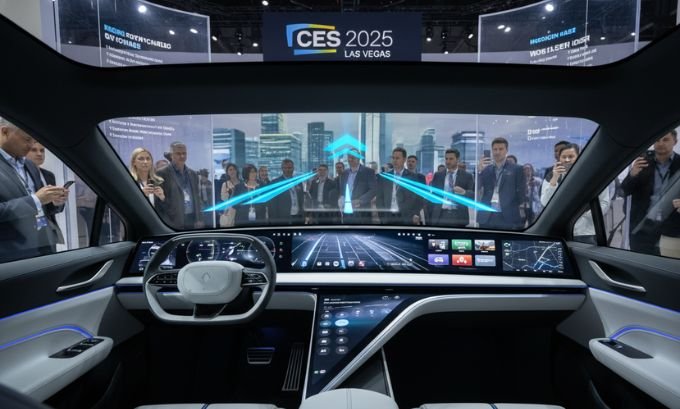
The Consumer Electronics Show 2025 solidified its position as a premier auto show, with carmakers showcasing technology that blurs the line between a vehicle and a high-tech gadget. This year, the focus was on the in-car experience, with companies like Hyundai and BMW unveiling innovations designed to make driving safer, more entertaining, and more connected.
Hyundai captured attention with the world’s first full-windshield holographic display. This technology projects vital information, such as navigation, speed, and safety alerts, directly onto the windshield in the driver’s line of sight. Unlike traditional heads-up displays that are confined to a small box, Hyundai’s system can place holographic images in a way that corresponds to the real world. For example, a navigation arrow can appear to float directly over the street where you need to turn. This creates a more intuitive and less distracting driving experience.
Meanwhile, BMW introduced its BMW Panoramic iDrive Display. This ultra-wide, curved screen spans the entire dashboard, combining the instrument cluster and the central infotainment system into one seamless interface. The display uses advanced screen technology to deliver vibrant colors and deep blacks, and it can be controlled via touch, voice, or a traditional rotary dial. It’s a stunning piece of design that makes the car’s cabin feel like a futuristic cockpit. These developments show that the next battleground for automakers is not just horsepower, but the quality of the in-car digital experience.
If you’d like to learn more about Consumer Electronics Show 2025, you’re welcome to read this detailed article gogonihon.jp.net and mindjournal.co
Samsung’s Vision: Screens and AI Everywhere
Samsung has long been a dominant force at CES, and this year was no exception. The company advanced its “screens everywhere” strategy, demonstrating innovative display technologies while also deeply integrating AI into its entire product ecosystem.
One of the most eye-catching demonstrations was Samsung’s latest generation of transparent and rollable screens. While still in the concept phase, these displays point to a future where screens can appear when needed and disappear when not in use. Imagine a window that can transform into a high-definition television or a small device that unrolls into a large tablet.
Beyond futuristic screens, Samsung showcased practical AI applications in its home appliances. A new washer and dryer set can detect the type of fabric and the soil level of your laundry, then automatically select the optimal cycle. The new wall oven uses an internal camera and AI to recognize what you are cooking and suggest the perfect temperature and time. As reported by CNET, this is part of a larger trend where AI isn’t about flashy tricks but about making everyday tasks simpler and more efficient.
Before you dive into the future of tech, explore the latest Japan-inspired gadgets, home essentials, and collectibles at TokyoMart.store — where innovation meets lifestyle.
Frequently Asked Questions (FAQ)
1. What were the biggest trends at the Consumer Electronics Show 2025?
The biggest trends at the Consumer Electronics Show 2025 were the deep integration of AI into everyday products, major advancements in automotive technology like holographic displays, next-generation chips from Nvidia and AMD powering new levels of performance, and innovations in screen technology from brands like Samsung.
2. Is Artificial Intelligence (AI) really making a difference in new products?
Yes. Unlike previous years, AI is now being used to create tangible benefits. For example, it is enabling proactive assistants in cars, optimizing cycles in smart appliances, and enhancing camera performance in smartphones. The focus has shifted from novelty to genuine utility.
3. What did chipmakers like Nvidia and AMD announce?
Nvidia announced its GeForce RTX 50 series GPUs, which offer major improvements for gaming and AI processing. AMD unveiled its RDNA 4 GPUs, focusing on delivering high-end performance with better power efficiency. These chips are the foundation for many of the show’s innovations.
4. How is car technology changing based on what was shown at CES?
Car technology is becoming more integrated and immersive. Hyundai showed a full-windshield holographic display for more intuitive navigation, and BMW introduced its Panoramic iDrive Display, which turns the dashboard into a seamless digital interface. The car is evolving into a connected, intelligent mobile space.
5. What is the Snapdragon 8 Elite Gen 5?
The Snapdragon 8 Elite Gen 5 is the latest high-end mobile processor from Qualcomm. Its key feature is an Advanced Professional Video codec that allows smartphones to capture and process video at a quality level that rivals professional cameras, as demonstrated with a Samsung phone at the Snapdragon Summit.
6. Did we see any new standalone AI devices like the Rabbit R1?
While the Rabbit R1 from CES 2024 was a major topic of discussion, the trend at the Consumer Electronics Show 2025 moved away from standalone AI gadgets. Instead, companies are focusing on embedding AI directly into larger platforms and products like phones, cars, and home appliances.
7. Where can I find reliable reviews of products from CES 2025?
Reputable technology news outlets like CNET provide extensive coverage, hands-on reviews, and expert analysis of the products and trends from CES. Their teams attend the show and offer in-depth insights into what is truly innovative.
Conclusion: A Future of Practical Innovation
The Consumer Electronics Show 2025 was not about far-off fantasies. It was a showcase of practical, meaningful innovation. The message was clear: technology is becoming more intelligent, more integrated, and more intuitive. The “smart” devices of tomorrow will not require us to learn new behaviors; they will adapt to us, working quietly in the background to make our lives easier, safer, and more efficient.
From the powerful chips developed by Nvidia and AMD to the visionary in-car experiences crafted by Hyundai and BMW, the advancements on display are set to redefine our relationship with technology. As these products move from the show floor to store shelves, we will begin to experience a future that is less about the devices themselves and more about what they empower us to do.
To stay informed on these emerging technologies, continue following expert sources like CNET and look for products featuring these groundbreaking components, like the Snapdragon 8 Elite Gen 5, in the months to come.
About the Author
Alex Carter is a senior technology journalist with over 15 years of experience covering the consumer electronics industry. Having attended the Consumer Electronics Show for the past ten years, Alex specializes in analyzing emerging trends in AI, mobile computing, and automotive tech. His work has been featured in major tech publications, and he is dedicated to translating complex technological advancements into clear, accessible insights for a broad audience.
References
- CNET coverage of CES 2025.
- Official press releases and keynote presentations from Nvidia, AMD, Samsung, Hyundai, and Qualcomm.
- Data from the Consumer Technology Association (CTA) regarding CES attendance and trends.
- Hands-on product demonstrations and expert interviews conducted on the show floor in Las Vegas.
