


Learning to code has never been more accessible—or more important. With AI transforming industries and tech skills in high demand, choosing the right coding course can be the difference between career success and wasted time. This comprehensive guide explores the best coding courses available in 2025, helping you find the perfect learning path for your goals.
Whether you’re a complete beginner wondering where to start or a professional looking to upskill, you’ll discover practical recommendations backed by real-world experience. We’ll cover free resources, paid platforms, intensive bootcamps, and specialized programs for web development, data science, and beyond.
Why Learning to Code Matters More Than Ever
The global developer community continues to grow rapidly. India alone is projected to have over 5.2 million developers by 2024, making it one of the largest programming workforces worldwide. This growth reflects a simple truth: coding skills unlock opportunities across virtually every industry.
Understanding programming fundamentals benefits everyone, not just aspiring software engineers. Entrepreneurs can better communicate with technical teams and make informed decisions about product development. Marketing professionals can leverage coding knowledge for data analysis and automation. Even if you never write production code, learning to think like a programmer enhances problem-solving abilities applicable to any field.
The rise of AI tools like ChatGPT, Gemini, and OpenAI’s API makes this an ideal time to start learning. These technologies can serve as coding tutors, explaining concepts, debugging errors, and suggesting solutions. Rather than replacing programmers, AI amplifies what skilled developers can accomplish. If you want to explore how AI is transforming education and skill development, you’ll find that coding literacy has become essential for leveraging these powerful tools effectively.
Understanding Your Learning Options
Before diving into specific courses, let’s clarify the three main paths for learning programming in 2025.
Free Online Tutorials and Platforms
Free resources like YouTube tutorials, documentation, and interactive platforms offer an excellent starting point. They allow you to explore different programming languages without financial commitment. However, they often lack structure, making it easy to jump between topics without building a solid foundation.
Best for: Absolute beginners exploring their interest in coding, supplementing paid courses, or learning specific techniques.
Paid Online Courses
Platforms like Udemy, Coursera, and specialized coding sites offer structured learning paths with video lessons, exercises, and projects. Courses typically range from $10 to $200 and provide more comprehensive coverage than free resources.
Best for: Self-motivated learners who want structured curriculum without the intensity or cost of bootcamps.
Coding Bootcamps
Intensive programs like Fullstack Academy and Coder Academy compress months of learning into weeks through immersive, practical training. They often include career services, networking opportunities, and industry connections.
Best for: Career changers seeking rapid skill acquisition, those who thrive in structured environments, and individuals wanting direct pathways to tech employment.
Top Free Coding Courses to Start Your Journey

FreeCodeCamp
FreeCodeCamp stands out as the gold standard for free coding education. This nonprofit offers comprehensive curriculums covering web development, data science, machine learning, and more—all completely free.
The platform combines interactive coding challenges with real-world projects. You’ll build actual applications rather than simply watching tutorials. Upon completion, you earn verified certifications that demonstrate your skills to potential employers.
What makes it exceptional: The learn-by-doing approach ensures you don’t just understand concepts theoretically but can apply them practically. Their YouTube channel features thousands of hours of additional tutorials covering virtually every programming topic imaginable.
Ideal for: Complete beginners who need structure without cost, visual learners who benefit from video content, and anyone wanting to build a portfolio through project-based learning.
If you’re interested in broader STEM education approaches, FreeCodeCamp exemplifies how quality technical education can be accessible to everyone regardless of financial means.
Fullstack Academy Open (Free Courses)
Fullstack Academy, known for its intensive paid bootcamp, offers several free preparatory courses. These cover JavaScript fundamentals, HTML/CSS basics, and computer science foundations.
Why it matters: These courses provide insight into Fullstack Academy’s teaching methodology while giving you a taste of bootcamp-style learning. The contextual approach emphasizes understanding why code works, not just how to write it.
Best for: Those considering bootcamps who want to evaluate teaching style, students needing JavaScript fundamentals before advancing to paid programs.
Harvard’s CS50 (Free through edX)
CS50, Harvard’s introduction to computer science, has become legendary in programming education. Available free through edX, it covers fundamental concepts using multiple languages including C, Python, SQL, and JavaScript.
The advantage: You’re learning from one of the world’s most prestigious universities. Professor David Malan’s engaging teaching style makes complex concepts accessible, and the problem sets challenge you to think critically.
Perfect for: Learners who want rigorous academic depth, those interested in computer science fundamentals beyond specific languages, and anyone seeking intellectual challenge.
To understand how distance learning resources have evolved, CS50 demonstrates how prestigious institutions now deliver world-class education globally through digital platforms.
Best Paid Coding Courses for Structured Learning
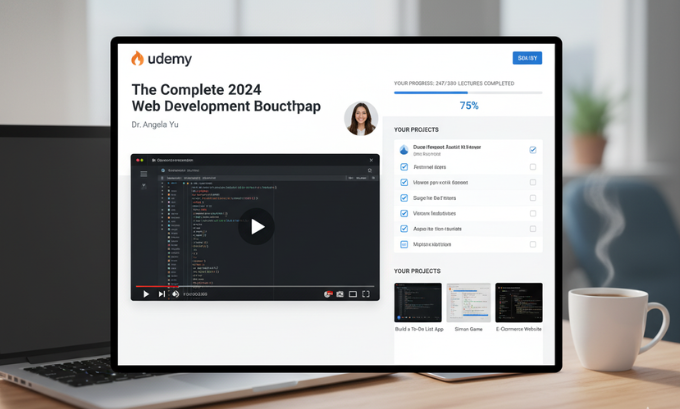
Udemy: The Complete Web Development Bootcamp by Dr. Angela Yu
Dr. Angela Yu’s course consistently ranks among Udemy’s best-sellers for good reason. This comprehensive program covers full-stack web development, teaching HTML, CSS, JavaScript, Node.js, React, and databases through hands-on projects.
What I appreciate: Dr. Yu’s teaching style balances technical depth with approachability. She explains complex concepts using real-world analogies and includes regular coding exercises that reinforce learning. The course receives constant updates, ensuring content remains relevant as web technologies evolve.
Practical value: By completion, you’ll have built multiple portfolio-worthy projects including websites, web applications, and mobile apps. The projects progress logically from simple to complex, building confidence incrementally.
Investment: Typically priced between $12-$20 during Udemy’s frequent sales (original price $199). Given the 60+ hours of content and lifetime access, it represents exceptional value.
Recommended for: Beginners committed to web development careers, visual learners who benefit from video instruction, and anyone wanting comprehensive coverage without bootcamp costs.
For insights into how web development skills translate to career opportunities, this course provides the practical foundation needed in today’s job market.
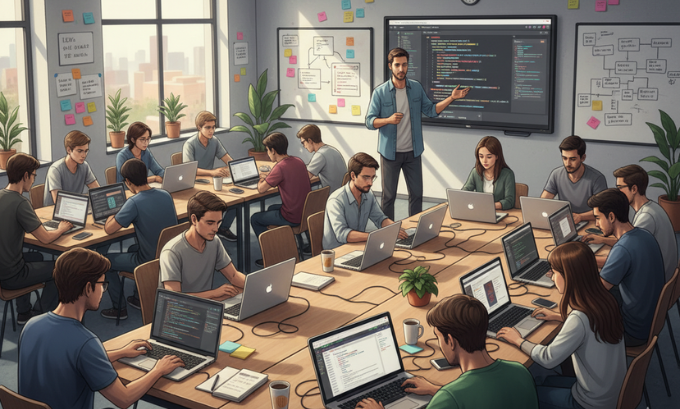
Codecademy Pro
Codecademy offers interactive learning through hands-on coding exercises directly in your browser. The Pro subscription ($19.99/month) unlocks comprehensive learning paths, real-world projects, and certificates of completion.
Learning paths include:
- Web Development
- Data Science
- Computer Science
- Machine Learning & AI
- Game Development
What sets it apart: The immediate feedback system catches errors as you code, explaining mistakes and guiding corrections. This interactive approach accelerates learning compared to passive video watching.
Best for: Learners who prefer doing over watching, those who need flexible scheduling, and students building skills across multiple programming domains.
ZTM Academy (Zero to Mastery)
Founded by developer Andrei Neagoie, ZTM Academy focuses on job-ready skills through project-based learning. Courses cover web development, Python programming, machine learning, cybersecurity, and more.
Unique approach: Each course emphasizes industry best practices and real-world application. You’re not just learning syntax—you’re understanding how professional developers work.
Community advantage: The active Discord community connects students with peers and instructors, providing support and networking opportunities beyond course content.
Pricing: Monthly ($39/month) or annual ($279/year) subscription provides access to all courses.
Ideal for: Self-directed learners wanting comprehensive coverage, those valuing community support, and students interested in multiple programming areas.
If you’re exploring how technology shapes business strategy, ZTM’s practical approach demonstrates how coding skills directly apply to entrepreneurial ventures.
Intensive Coding Bootcamps: Fast-Track Your Career
Fullstack Academy
Fullstack Academy’s immersive programs compress comprehensive web development education into 13-28 weeks. Their curriculum covers JavaScript, Node.js, Express, React, SQL databases, and computer science fundamentals.
What makes it exceptional:
- Project-based learning: Build real applications from day one
- Pair programming: Collaborate with classmates, mirroring professional development
- Career services: Resume workshops, interview prep, and employer connections
- Practical context: Emphasis on understanding underlying principles, not memorizing syntax
Real-world impact: Graduates report high job placement rates in software engineering roles. The intensive format means you’re ready for junior developer positions within months rather than years.
Investment: Full-time programs typically cost $17,000-$18,000, with financing options and scholarships available.
Best for: Career changers committed to software engineering, those who thrive in intensive environments, and individuals wanting direct pathways to tech employment with strong support systems.
Coder Academy (Australia)
Coder Academy specializes in full-stack development bootcamps across major Australian cities. Their accelerated programs combine classroom instruction with real client projects, providing practical experience before graduation.
Australian advantage: Strong connections with local tech employers facilitate job placement. The curriculum aligns with Australian industry needs and standards.
Flexible options: Part-time evening and weekend classes accommodate working professionals, while full-time intensive programs suit career changers.
Cost consideration: Programs range from AUD $9,500-$15,000 depending on format and duration.
Perfect for: Australian residents seeking local job placement support, those needing flexible scheduling, and students wanting exposure to real client work during training.
For those interested in international education opportunities, bootcamps demonstrate how practical skill acquisition transcends traditional academic pathways.
App Academy
App Academy’s unique “pay after you get hired” model makes intensive coding education accessible regardless of upfront financial resources. Their 16-week full-time or 48-week part-time programs focus on full-stack web development.
Distinctive approach: No tuition until you secure a job earning at least $50,000 annually. This aligns the school’s success directly with student outcomes.
Curriculum depth: Comprehensive coverage of JavaScript, Python, React, Redux, SQL, and computer science fundamentals prepares students for technical interviews and real-world development.
Career preparation: Extensive interview training and job search support continue until placement.
Considerations: The deferred tuition model means you’ll eventually pay more than upfront bootcamps, but it eliminates initial financial barriers.
Recommended for: Career changers without savings for upfront tuition, risk-averse learners wanting job guarantees before payment, and those confident in their ability to succeed in intensive programs.
Choosing Your First Programming Language
The “which language should I learn first?” question paralyzes many beginners. The truth? Your first language matters less than you think. Programming fundamentals transfer across languages—once you understand variables, loops, and functions in one language, learning another becomes significantly easier.
That said, some languages offer better entry points than others in 2025.
JavaScript: The Web’s Universal Language
Why start here: JavaScript runs everywhere—browsers, servers, mobile devices, and even IoT devices. Learning JavaScript opens doors to front-end development, back-end development (Node.js), and mobile app creation (React Native).
Career demand: Every company with a web presence needs JavaScript developers. The job market remains robust with competitive salaries averaging $75,000-$120,000 for experienced developers.
Learning resources: Abundant tutorials, courses, and documentation make JavaScript highly accessible for beginners.
Real-world application: You can build visible, interactive projects immediately, providing tangible proof of progress and portfolio pieces.
For practical guidance, consider starting with FreeCodeCamp’s JavaScript curriculum or Dr. Angela Yu’s Udemy bootcamp mentioned earlier.
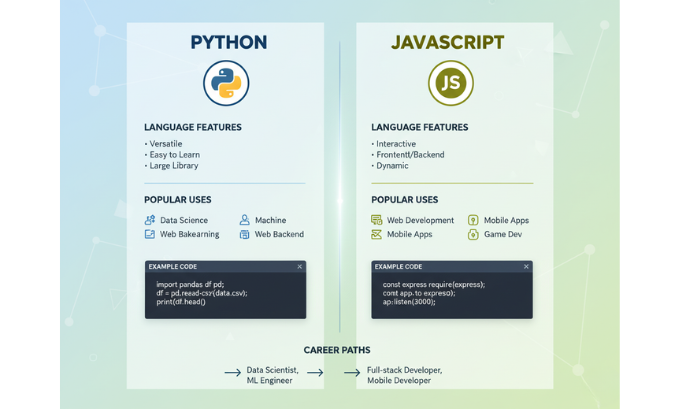
Python: The Versatile Powerhouse
Why it’s popular: Python’s readable syntax makes it exceptionally beginner-friendly. Code reads almost like English, reducing the initial learning curve.
Career paths: Python dominates data science, machine learning, artificial intelligence, automation, and backend web development. Companies like Google, Netflix, and NASA rely heavily on Python.
Salary potential: Data scientists and machine learning engineers using Python command premium salaries, often exceeding $100,000-$150,000 annually.
Future-proof: As AI and machine learning grow increasingly important, Python skills become more valuable.
Learning curve: While easy to start, Python’s depth allows continuous growth from beginner to advanced applications.
If you’re curious about how AI tools are transforming industries, Python provides the foundation for working with cutting-edge technologies.
HTML/CSS: The Foundation of Web Design
Start here if: Visual design interests you more than logic and algorithms. HTML structures web content while CSS styles it.
Career connection: Front-end developers and web designers need strong HTML/CSS skills. These languages complement JavaScript for complete web development capability.
Quick wins: You’ll create visible results immediately—styled web pages you can share and showcase.
Next steps: HTML/CSS naturally lead into JavaScript, making them excellent first steps toward full-stack development.
Essential Tools for Learning to Code
Beyond courses, certain tools significantly enhance your learning experience.
Code Editors
Visual Studio Code: The industry-standard free editor offers syntax highlighting, intelligent code completion, debugging, and extensive extensions. Its popularity means abundant tutorials and community support.
Alternatives: Sublime Text, Atom, or JetBrains IDEs offer similar functionality with different features and pricing models.
Why it matters: A good editor catches errors, suggests improvements, and makes coding more efficient. Starting with professional tools builds good habits early.
Version Control (Git/GitHub)
What it does: Git tracks code changes, enabling collaboration and preventing data loss. GitHub hosts repositories and facilitates sharing code with others.
Why learn it now: Every professional developer uses version control. Learning Git early makes project management easier and demonstrates professionalism to potential employers.
Resources: GitHub’s free guides and interactive tutorials teach fundamental concepts quickly.
AI Coding Assistants
GitHub Copilot: This AI pair programmer suggests code completions and entire functions based on context. It accelerates development and helps you learn by example.
ChatGPT/Claude: Use these conversational AI tools to explain errors, suggest solutions, and clarify confusing concepts.
Important caveat: AI tools assist learning but shouldn’t replace understanding. Always comprehend suggested code rather than blindly copying it.
For insights on integrating AI into your learning workflow, these assistants can dramatically accelerate your coding journey when used thoughtfully.
Building Your Portfolio While Learning
Completing courses matters, but employers care more about what you can build. Start creating portfolio projects early in your learning journey.
Portfolio Project Ideas by Skill Level
Beginner Projects:
- Personal website showcasing your skills and projects
- To-do list application with add, edit, and delete functionality
- Simple calculator or unit converter
- Weather app using public APIs
Intermediate Projects:
- E-commerce site with shopping cart functionality
- Social media clone with user authentication
- Blog platform with content management system
- Data visualization dashboard
Advanced Projects:
- Real-time chat application
- Machine learning model solving a specific problem
- Full-stack application with complex database relationships
- Open-source contribution to existing projects
Portfolio tips:
- Host projects on GitHub with clear README files
- Deploy web applications using free services like Netlify or Vercel
- Write brief case studies explaining your problem-solving process
- Update regularly as skills improve
If you want to learn more about building effective digital marketing strategies for your portfolio, proper presentation of your work matters as much as the technical quality.
The Role of Networking and Community
Learning to code can feel isolating, but connecting with other developers accelerates growth and opens opportunities.
Online Communities
r/learnprogramming (Reddit): Active community where beginners ask questions and share resources
Stack Overflow: Essential for finding solutions to coding problems
Discord servers: Many courses and bootcamps maintain active servers for real-time discussion
Twitter/LinkedIn: Follow developers sharing insights, tutorials, and job opportunities
Local Meetups and Events
Post-pandemic, in-person coding meetups have resurged. Sites like Meetup.com list local programming groups, hackathons, and tech talks. These events provide:
- Networking with potential employers and collaborators
- Exposure to real-world projects and challenges
- Motivation through shared learning experiences
- Mentorship opportunities from experienced developers
Code with Friends
Find an accountability partner or study group. Pair programming—where two people work together on the same code—helps both participants learn faster. Teaching concepts to others reinforces your own understanding.
For those interested in education technology trends, collaborative learning platforms continue evolving to better connect learners worldwide.
Common Mistakes to Avoid When Learning Coding
Tutorial Hell
The problem: Endlessly consuming tutorials without building anything yourself. You watch course after course but never apply knowledge independently.
The solution: Follow the 70/30 rule—spend 70% of your time coding and 30% watching tutorials. After completing any lesson, build something similar without following along.
Ignoring Computer Science Fundamentals
The problem: Focusing solely on syntax and frameworks while neglecting underlying concepts like data structures, algorithms, and computational thinking.
The solution: Balance practical coding with theoretical understanding. Resources like CS50 or “Grokking Algorithms” provide accessible introductions to fundamental concepts.
Not Reading Error Messages
The problem: Seeing error messages and immediately searching for solutions without reading what the error actually says.
The solution: Train yourself to read error messages carefully. They usually explain exactly what went wrong and where. This skill dramatically improves debugging efficiency.
Comparing Your Progress to Others
The problem: Feeling discouraged because others seem to learn faster or build more impressive projects.
The solution: Programming mastery takes time. Everyone learns at different rates based on prior experience, available time, and learning style. Focus on your own progress rather than external comparisons.
Not Taking Breaks
The problem: Coding for hours without breaks leads to burnout and decreased retention.
The solution: Use the Pomodoro Technique—25 minutes of focused work followed by 5-minute breaks. Your brain consolidates learning during rest periods.
If you’re exploring cybersecurity considerations in your coding journey, building secure habits early prevents costly mistakes later.
Creating Your Personalized Learning Plan
Here’s a practical roadmap for different learning goals:
Path 1: Web Development Career (6-12 months)
Month 1-2: HTML, CSS fundamentals (FreeCodeCamp or Codecademy)
Month 3-4: JavaScript basics and DOM manipulation
Month 5-6: Build 3-4 simple projects (calculator, to-do app, etc.)
Month 7-8: Learn React or Vue.js for modern front-end development
Month 9-10: Backend basics with Node.js and Express
Month 11-12: Build 2-3 full-stack projects for portfolio
Resources: Dr. Angela Yu’s Udemy course, FreeCodeCamp, Fullstack Academy Open courses
Path 2: Data Science Career (8-14 months)
Month 1-3: Python fundamentals and syntax
Month 4-5: Data manipulation with Pandas and NumPy
Month 6-7: Data visualization with Matplotlib and Seaborn
Month 8-9: Statistics and probability fundamentals
Month 10-11: Machine learning basics with scikit-learn
Month 12-14: Deep learning introduction, complete Kaggle competitions
Resources: Python courses on Codecademy, DataCamp, or Coursera’s Data Science specializations
Path 3: Exploring Programming (3-6 months)
Month 1-2: Choose either JavaScript or Python based on interest
Month 3-4: Build 2-3 simple projects in chosen language
Month 5-6: Explore different domains (web, data, games) through small projects
Resources: FreeCodeCamp, CS50 first few weeks, YouTube tutorials for specific interests
For additional perspectives on technological trends shaping education, understanding where coding fits into broader digital literacy becomes increasingly important.
Frequently Asked Questions
How long does it take to learn coding?
Basic proficiency in one language typically requires 3-6 months of consistent practice (10-20 hours weekly). Job-ready skills for entry-level positions usually take 6-18 months depending on intensity and prior experience. Mastery is a continuous journey—even experienced developers constantly learn new technologies.
Can I learn coding without a computer science degree?
Absolutely. Many successful developers are self-taught or bootcamp graduates. Employers increasingly prioritize demonstrated skills and portfolio quality over formal credentials. While CS degrees provide valuable theoretical foundation, they’re not prerequisites for most programming careers.
Which coding course has the best job placement rates?
Established bootcamps like Fullstack Academy, App Academy, and Coder Academy typically report 70-85% job placement within six months of graduation. However, placement rates depend heavily on individual effort, local job markets, and economic conditions. Research specific bootcamp outcomes for your region.
Should I specialize or learn multiple languages?
Start with one language and gain proficiency before adding others. Specialization makes you more employable initially—employers prefer developers who excel at specific technologies over generalists with surface-level knowledge across many. Once you’re proficient in one language, learning additional languages becomes significantly easier.
Are free coding courses as good as paid ones?
Quality free resources like FreeCodeCamp, CS50, and Fullstack Academy’s open courses rival paid offerings in content quality. Paid courses typically provide better structure, support, certifications, and career services. Choose based on your learning style, budget, and need for external accountability.
How important are coding certifications?
Certifications matter less than portfolio quality and demonstrated skills. However, recognized certifications from organizations like FreeCodeCamp, respected bootcamps, or tech companies (AWS, Google Cloud) can strengthen resumes for entry-level positions. Focus on building projects first, certifications second.
Your Next Steps: Starting Today
The best coding course is the one you’ll actually complete. Rather than endlessly researching perfect options, start with these practical first steps:
Today:
- Choose one free platform (FreeCodeCamp or Codecademy)
- Complete your first lesson (just 30 minutes)
- Install Visual Studio Code on your computer
This Week:
- Commit to a specific learning schedule (even 30 minutes daily)
- Write your first small program (even “Hello World” counts)
- Join one online coding community
This Month:
- Complete a beginner course or substantial portion of one
- Build your first small project independently
- Set up a GitHub account and upload your code
Remember, every professional developer started exactly where you are now—knowing nothing but willing to learn. The coding skills you build today open doors to careers in software development, data science, artificial intelligence, cybersecurity, and countless other fields.
The tech industry’s continued growth means demand for skilled programmers will only increase. By starting your coding journey in 2025, you’re positioning yourself for opportunities that didn’t exist a decade ago and will only expand in years to come.
For additional resources on starting your tech career journey, explore our comprehensive guides covering everything from portfolio building to interview preparation.
Don’t wait for the perfect moment or the perfect course. Start learning today with whatever resources you have available. Your future in tech begins with that first line of code.
If you want to know more about choosing the right VPN for secure coding practices, you may visit this site.
