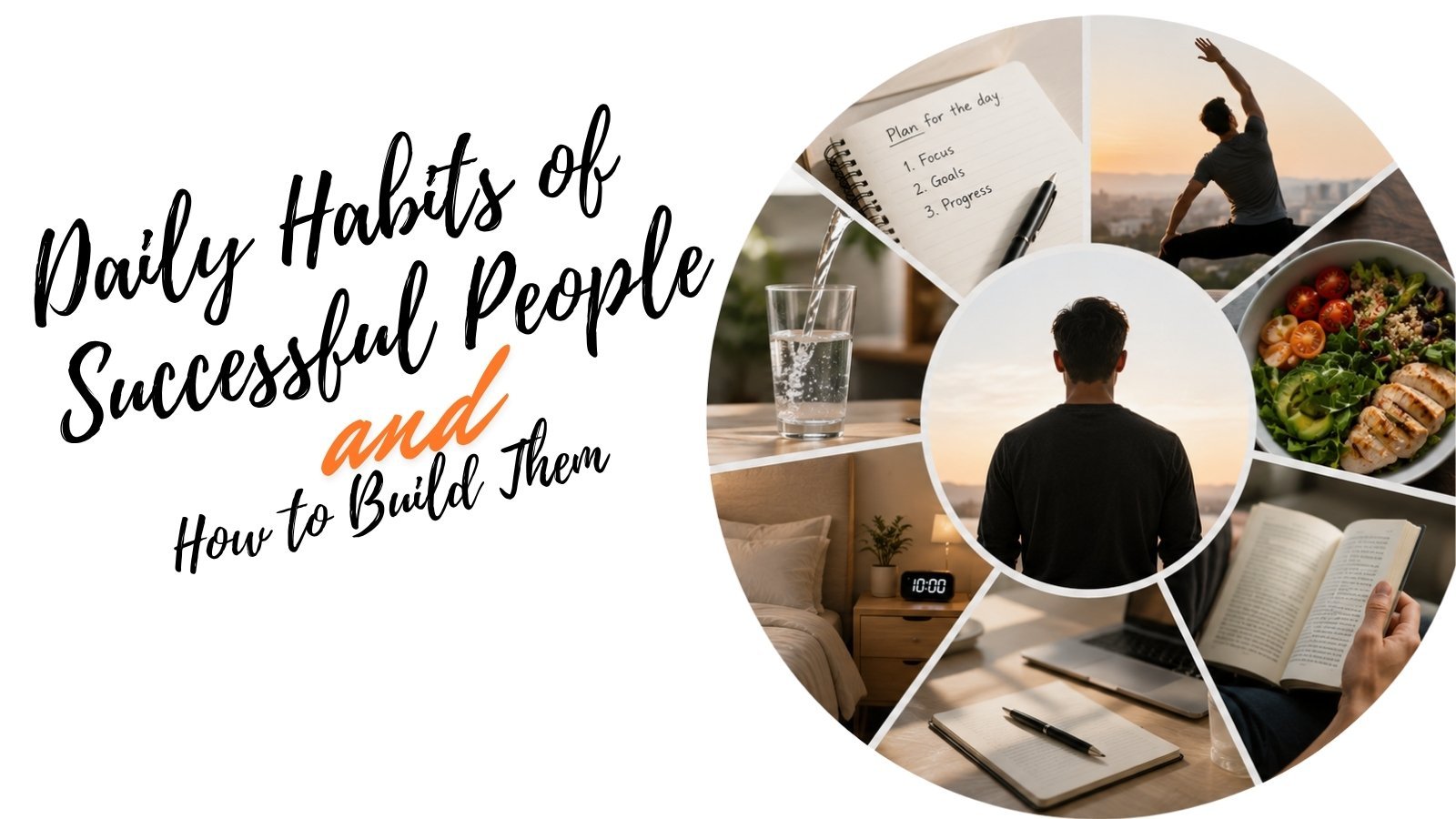
Successful people tend to share a handful of daily habits: they wake with a plan, prioritize their most important work, move their bodies, read or learn regularly, and reflect at the end of the day. These habits aren’t magic—they’re small, repeatable actions that compound over time.
What separates people who consistently reach their goals from those who stall out? Often, it comes down to what they do every day. Not the occasional burst of effort, but the small, steady routines that shape how they spend their hours.
This post breaks down the most common daily habits of successful people across business, sports, and the arts. You’ll learn what each habit looks like, why it works, and how to start building it into your own routine. None of these require special talent or a lot of money. They just require consistency.
Let’s get into it.
Table of Contents
What daily habits do most successful people share?
Successful people structure their days around intention rather than reaction. Instead of letting the inbox or the news set their priorities, they decide in advance what matters most.
Research backs this up. A multi-year study by author Thomas Corley, who interviewed 233 wealthy individuals, found clear patterns in their daily routines—from reading habits to early rising. While wealth isn’t the only measure of success, the routines themselves apply broadly to anyone chasing a meaningful goal.
Here are the habits that come up again and again.
Why do successful people wake up early?
Many high achievers start their day before the rest of the world wakes up. Apple CEO Tim Cook reportedly rises around 4 a.m., and former PepsiCo CEO Indra Nooyi has spoken about waking before dawn.
How it works: An early start gives you quiet, uninterrupted time before demands pile up. You get a head start on your most important task without the distraction of calls, messages, or meetings.
The benefit: You begin the day on your own terms rather than reacting to other people’s priorities.
The caveat: Waking early only helps if you also sleep enough. Cutting sleep to gain morning hours tends to backfire. If you’re not a natural early riser, focus less on the clock and more on protecting a block of uninterrupted time, whenever that falls.
How does planning your day improve productivity?
Successful people rarely start a day without knowing what they want to accomplish. They plan—either the night before or first thing in the morning.
How it works: You decide your top priorities in advance, so you don’t waste energy deciding what to do moment to moment. Many people use a simple method: pick the one to three tasks that matter most and tackle those first.
The benefit: You spend your best hours on high-value work instead of busywork. This is sometimes called “eating the frog”—doing your hardest, most important task early, before distractions creep in.
A few practical ways to plan:
- Write it down: Keep a short list of your top tasks, not a sprawling to-do list.
- Time-block: Assign specific hours to specific tasks.
- Review the night before: Set your priorities for tomorrow before you go to bed.
Why is reading a common habit among successful people?
Reading shows up in nearly every study of high achievers. Warren Buffett has said he spends as much as 80% of his day reading, and Bill Gates is known for finishing around 50 books a year.
How it works: Reading exposes you to new ideas, skills, and perspectives. It compounds your knowledge over time, much like interest builds on savings.
The benefit: You make better decisions because you draw on a wider base of information and experience.
You don’t need to read 50 books a year to benefit. Even 20 minutes a day adds up to dozens of books over time. Choose material tied to your goals—business, your craft, history, or biographies of people you admire.
How does daily exercise support success?
Physical activity is a near-universal habit among high performers. Richard Branson has credited exercise with adding hours of productivity to his day.
How it works: Exercise improves your energy, mood, and focus. Studies suggest regular physical activity can sharpen memory and thinking, which helps with the mental demands of complex work.
The benefit: You sustain higher energy and concentration throughout the day, not just during the workout.
The caveat: You don’t need a two-hour gym session. A brisk 30-minute walk, a short run, or a quick home workout delivers most of the benefit. Consistency matters more than intensity.
Successful people don’t just manage their time well—they manage their money wisely too. Check out these top fintech apps in India for better money management.
Why do successful people set aside time to reflect?
Reflection turns experience into learning. Many high achievers end their day by reviewing what went well, what didn’t, and what they’d change.
How it works: You take a few minutes to look back, often through journaling. This helps you spot patterns, celebrate progress, and adjust course before small problems grow.
The benefit: You improve faster because you learn from each day rather than repeating the same mistakes.
A simple reflection practice can be as short as three questions:
- What went well today?
- What didn’t go as planned?
- What will I do differently tomorrow?
How can you build these habits into your own routine?
Knowing the habits is easy. Building them is the hard part. The key is to start small and stay consistent.
Start with one habit. Trying to overhaul your entire routine at once usually fails. Pick the single habit that would help you most and focus on it for a few weeks.
Attach it to something you already do. This is called habit stacking. For example: “After I pour my morning coffee, I’ll write down my top three tasks.” Linking a new habit to an existing one makes it easier to remember.
Make it small enough to feel easy. Read one page. Walk for five minutes. Tiny starts build momentum, and you can scale up once the habit sticks.
Track your progress. Marking each day you complete a habit creates a streak you’ll want to protect. A simple calendar or app works fine.
Be patient. Research on habit formation suggests it can take anywhere from a couple of weeks to several months for a behavior to feel automatic, depending on the habit and the person. Don’t quit if it feels hard at first.
Small habits, big results
The daily habits of successful people aren’t secrets, and they aren’t out of reach. Waking with a plan, doing your most important work first, moving your body, reading, and reflecting—these are simple actions anyone can adopt.
What makes them powerful is consistency. One good day won’t change much. But repeat these habits for months and years, and they compound into real results.
Start today. Choose one habit from this list, make it small, and attach it to your existing routine. Then build from there.
Maintaining a healthy work-life balance and staying motivated are essential for long-term success. Explore our guides on Work-Life Balance Tips and How to Stay Motivated to build better habits, reduce stress, and stay focused on your goals.
Frequently asked questions
What is the most important daily habit for success?
There’s no single habit that works for everyone. That said, planning your day around your top priorities tends to deliver the fastest results, because it focuses your time and energy on what actually moves you forward.
How long does it take to build a new habit?
Research suggests it can take anywhere from about two weeks to several months for a behavior to become automatic, depending on the habit’s difficulty and the individual. Plan for consistency over weeks, not days.
Do you have to wake up early to be successful?
No. Many successful people rise early, but the real benefit comes from having uninterrupted time for focused work—not from the clock itself. If you focus better at night, build your routine around that instead.
How many habits should I try to build at once?
Start with one. Building a single habit at a time gives you the best odds of making it stick. Once it feels automatic, you can add another.
Can these habits work for students or people early in their careers?
Yes. Habits like planning your day, reading, exercising, and reflecting apply at any age or career stage. Starting early simply gives the habits more time to compound.
