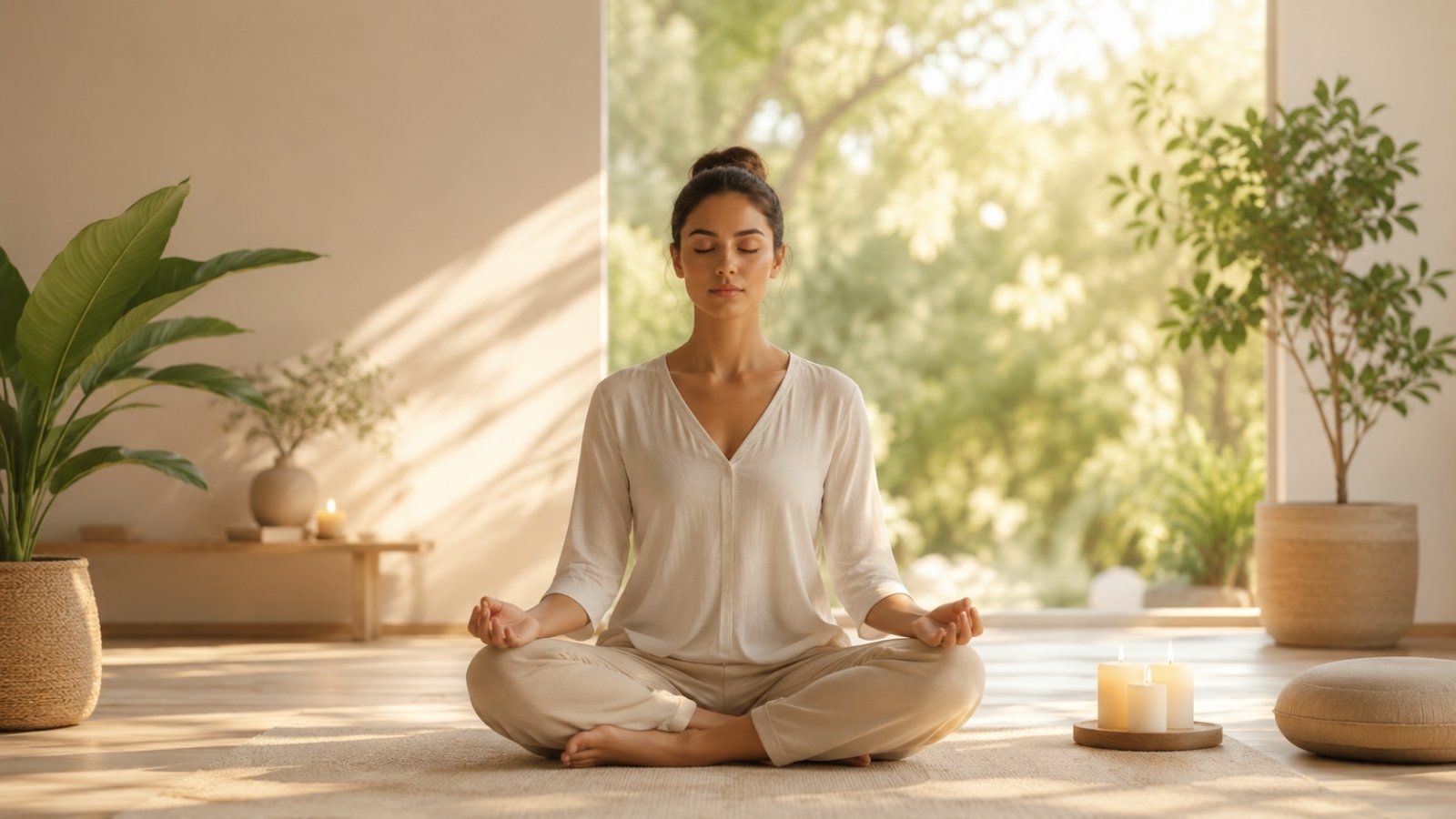
Meditation is the practice of training your attention to be more present and aware. To start, sit comfortably, focus on your breath, and gently return your attention whenever your mind wanders. Just 5 to 10 minutes a day can help reduce stress and improve focus over time.
You don’t need a special cushion, a quiet mountaintop, or hours of free time to meditate. You just need a few minutes and a willingness to pay attention. That’s the heart of it.
Many people assume meditation means clearing your mind completely. It doesn’t. Your mind will wander, and that’s part of the process. Meditation for Beginners starts with understanding this simple truth: meditation is not about stopping thoughts but learning how to work with them. Meditation is simply noticing when your attention drifts and bringing it back, over and over. Each time you do this, you’re building a skill that can improve focus, awareness, and emotional balance over time.
This guide walks you through what meditation is, why it can help, and how to start a practice that fits your life. You’ll learn simple techniques, common mistakes to avoid, and what to expect in your first few weeks. No prior experience needed.
Table of Contents
What is meditation, really?
Meditation is a set of techniques designed to focus your attention and increase your awareness of the present moment. The goal isn’t to stop thinking. The goal is to change your relationship with your thoughts.
Most forms of meditation share a few common elements:
- A point of focus: Often your breath, but it can also be a sound, a word, or a body sensation.
- A relaxed posture: Sitting, lying down, or even walking.
- An open attitude: Letting thoughts come and go without judging them.
- Gentle redirection: Returning your focus each time your mind wanders.
That last point matters most. Meditation isn’t about getting it “right.” It’s about noticing your wandering mind and guiding it back. That repeated act of returning is the real exercise.
Why meditate? The science-backed benefits
Research on meditation has grown quickly over the past two decades. Studies suggest that regular practice may offer real benefits for both mind and body, though the size of those benefits varies from person to person.
Here’s what the evidence points to:
- Reduced stress: A 2014 review published in JAMA Internal Medicine found that mindfulness meditation programs may reduce symptoms of anxiety, depression, and pain.
- Better focus: Studies suggest meditation can improve attention span and your ability to concentrate on a single task.
- Improved emotional regulation: Regular practice may help you respond to difficult emotions with more calm and less reactivity.
- Better sleep: Meditation can help quiet a racing mind, which may make it easier to fall asleep.
A few notes on these claims. Meditation is not a cure for medical or mental health conditions. It works best as one part of a healthy routine. If you’re dealing with serious anxiety, depression, or trauma, talk to a doctor or therapist before relying on meditation alone.
How do you actually meditate? A step-by-step guide
You can start meditating today with no equipment and no training. Follow these steps for a basic breath-focused session.
Step 1: Choose a quiet spot. Find a place where you won’t be interrupted for a few minutes. It doesn’t need to be silent — just calm enough to settle in.
Step 2: Set a timer. Start with 5 minutes. A short, manageable session beats an ambitious one you dread.
Step 3: Sit comfortably. Sit on a chair or cushion with your back reasonably straight. Rest your hands in your lap. You can close your eyes or keep a soft gaze downward.
Step 4: Notice your breath. Pay attention to the natural rhythm of your breathing. Feel the air move in and out. Don’t try to control it — just observe.
Step 5: When your mind wanders, return. Your thoughts will drift. That’s normal. When you notice it, gently bring your attention back to your breath. No frustration needed.
Step 6: End gently. When the timer goes off, take a moment before standing up. Notice how you feel.
That’s a complete meditation. The simplicity is the point.

What are the best meditation techniques for beginners?
Breath-focused meditation is a great starting point, but it’s not the only option. Different techniques suit different people. Here are four worth trying.
Mindfulness meditation
How it works: You focus on the present moment — your breath, sounds, or sensations — and observe your thoughts without judgment.
Best for: Beginners who want a flexible, all-purpose practice. This is the most widely studied form of meditation.
Body scan meditation
How it works: You bring your attention slowly through each part of your body, from your toes to your head, noticing any sensations or tension.
Best for: People who hold stress physically or who want to relax before sleep.
Guided meditation
How it works: You follow along with an instructor’s voice, either in person or through an app or recording.
Best for: Beginners who find it hard to focus on their own. The guidance gives your mind something to follow.
Loving-kindness meditation
How it works: You silently repeat phrases wishing well for yourself and others, such as “May you be happy, may you be healthy.”
Best for: People who want to cultivate compassion or work through difficult feelings toward themselves or others.
You don’t have to pick just one. Many people mix techniques depending on their mood and goal.
How long should beginners meditate each day?
Start small. Five to ten minutes a day is enough to build the habit and notice early benefits. Consistency matters more than length.
A daily 5-minute session does more for you than a single 60-minute session once a month. Your brain builds the skill through repetition, not through marathon efforts. As the habit settles in, you can extend your sessions to 15 or 20 minutes if you’d like.
Here’s a simple progression to follow:
- Weeks 1–2: 5 minutes a day.
- Weeks 3–4: 10 minutes a day.
- Month 2 and beyond: 15–20 minutes, if it feels right.
There’s no rule that says longer is better. Choose a length you can stick with.
Common mistakes beginners make (and how to avoid them)
Most early frustration comes from a few simple misunderstandings. Knowing them ahead of time can save you weeks of doubt.
- Expecting a blank mind: Your mind will wander constantly. That’s not failure — noticing the wandering is the practice itself.
- Judging your sessions: There’s no “good” or “bad” meditation. Some days will feel calm, others restless. Both count.
- Trying to do too much too soon: Starting with 30-minute sessions often leads to burnout. Begin small.
- Giving up too early: The benefits build gradually. Give yourself at least a few weeks before judging whether it works for you.
- Forcing relaxation: Trying hard to relax can backfire. Let calm arrive on its own instead of chasing it.
The kindest thing you can do is lower your expectations. Meditation rewards patience, not effort.
What to expect in your first few weeks
The early days of meditation can feel underwhelming. You might wonder if you’re doing it right or whether anything is happening at all. This is normal.
For most people, the first noticeable change is a small one: you catch yourself reacting less to minor stress. You might pause before snapping at a frustrating email, or notice a tense moment passing more easily. These shifts are subtle but meaningful.
Deeper benefits — better focus, calmer moods, improved sleep — tend to build over weeks and months of regular practice. Think of it like exercise. You won’t see results after one session, but steady practice adds up.
Start your practice today
Meditation is a skill anyone can learn, and the best way to begin is simply to begin. Set a timer for five minutes, find a quiet spot, and focus on your breath. When your mind wanders, bring it back. That’s all it takes to start.
To keep your practice going, try these next steps:
- Pick a consistent time: Attaching meditation to an existing habit — like right after you wake up — makes it easier to stick with.
- Try a guided app: Apps like Headspace, Calm, or Insight Timer offer beginner-friendly sessions.
- Be patient with yourself: Progress is gradual, and every session counts, even the messy ones.
Your mind, like any muscle, grows stronger with practice. Start small, stay consistent, and let the benefits unfold in their own time.
FAQs about Meditation for Beginners
How long does it take to see benefits from meditation?
Many people notice small changes — like reacting less to stress — within a couple of weeks. Deeper benefits such as improved focus and better sleep usually build over several weeks to months of regular practice.
Do I need to sit cross-legged on the floor to meditate?
No. You can sit in a chair, lie down, or even walk. The posture matters less than your attention. Choose whatever position lets you stay alert and comfortable.
What should I do when my mind keeps wandering?
Simply notice that it wandered and gently return your focus to your breath. This happens to everyone, and the act of returning is the core of the practice — not a sign you’re doing it wrong.
Is meditation a religious practice?
Meditation has roots in several religious traditions, but it can be practiced in a completely secular way. Mindfulness meditation, in particular, is widely used as a non-religious tool for stress and focus.
Can meditation replace therapy or medication?
No. Meditation can support your mental health, but it is not a substitute for professional treatment. If you’re managing a mental health condition, talk to a doctor or therapist about how meditation might fit into your care.
What time of day is best to meditate?
The best time is whenever you’ll do it consistently. Many people prefer mornings to set a calm tone for the day, but evening sessions can help you unwind. Experiment and see what fits your routine.
