


Choosing a Virtual Private Network, or VPN, comes down to understanding your specific needs and matching them with a provider’s features. Focus on key areas like privacy policies, server network, speed, and security protocols. By evaluating these factors, you can find a trustworthy service that protects your online activity without slowing you down.
A VPN (Virtual Private Network) acts like a secure, encrypted tunnel for your internet traffic. It hides your real IP address and location, making your online actions much more private. This is useful for protecting your data on public Wi-Fi, accessing content from different regions, and preventing your Internet Service Provider (ISP) from tracking your browsing habits. But with so many options available, how do you pick the right one? This guide will walk you through everything you need to know.
Understanding What to Look For in a VPN

To learn how to choose a VPN, you need to look past the marketing hype. The best choice depends on what you plan to use it for. Are you a frequent traveler who relies on public Wi-Fi? Do you want to stream shows from other countries? Or is your main goal to enhance your online Privacy and Security? Your primary use case will determine which features matter most.
Key evaluation criteria include:
- Security Features: Look for strong encryption, like AES-256, and modern protocols. The WireGuard protocol is a popular choice known for its excellent speed and security.
- Privacy Policy: A strict “no-logs” policy is non-negotiable. This means the provider does not track or store any information about your online activities.
- Server Network: A large and geographically diverse server network gives you more options for changing your location and often results in better performance.
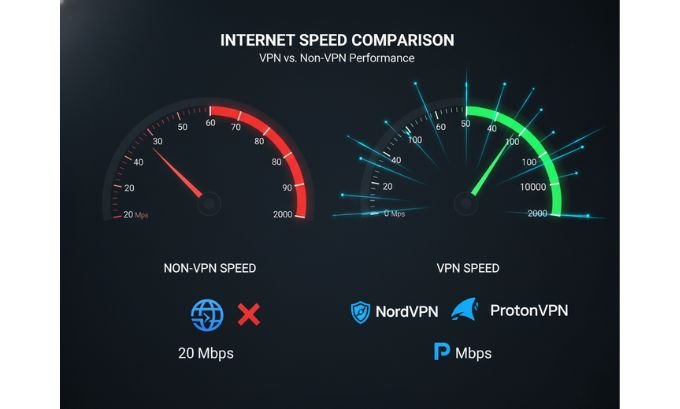
- Speed and Performance: A VPN will always have some impact on your internet speed, but top providers minimize this. Look for services known for fast connections.
- Ease of Use: The software should be intuitive and easy to navigate on all your devices, from your laptop to your smartphone.
My Personal Experience Finding the Right VPN
As someone who works remotely and travels often, finding a reliable VPN was a necessity, not a luxury. My journey started after a scare at an airport lounge. I was connected to the public Wi–Fi to finish some work, and later that day, I received a notification about a suspicious login attempt on one of my accounts. While I had been using HTTPS Encryption on most sites, which protects the content of my traffic, I realized my connection metadata (like the sites I visited) was still visible to anyone snooping on the network.
This event pushed me to research VPNs seriously. I started with a free service, which was a mistake. My internet speed dropped dramatically, and I was constantly bombarded with ads. Digging into its privacy policy, I discovered it was logging my data—the very thing I was trying to avoid.
My search then led me to paid services. I tested several top contenders, focusing on real-world performance. For instance, I tried streaming my favorite shows while connected to servers in different countries. With NordVPN, I was impressed by its consistent speeds, largely thanks to its NordLynx protocol, which is built around WireGuard. It handled 4K streaming without any buffering.
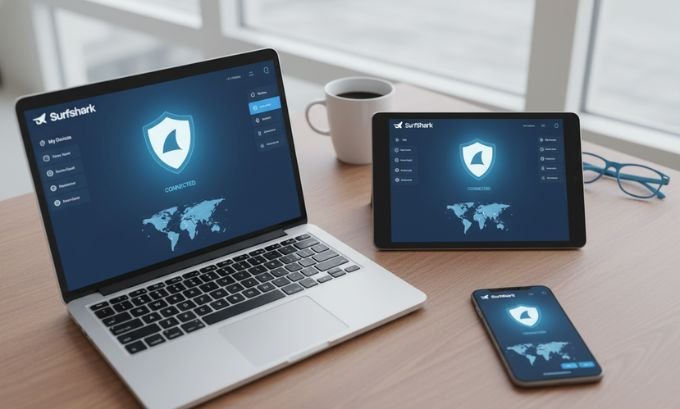
Next, I tested Surfshark on a family trip. Its main selling point for me was the unlimited device connections. My entire family could connect their phones, tablets, and laptops under a single subscription, which was incredibly cost-effective. We used it to secure our connections at the hotel and even access our home streaming libraries.
For my more security-sensitive tasks, I turned to ProtonVPN. Its Swiss jurisdiction and commitment to transparency stood out. Knowing it originated from the same team as ProtonMail, a service I already trusted for secure email, gave me confidence. Its open-source apps and audited no-logs policy were exactly what I needed for peace of mind when handling sensitive work documents.
This hands-on experience taught me that there’s no single “best” VPN for everyone. It’s about finding the provider that best fits your lifestyle and priorities.
Comparing the Top VPN Providers in 2025
Every top VPN has unique strengths. Some excel at speed, while others prioritize security or offer specialized features. Here’s a breakdown of the leading options to help you decide.
NordVPN: The All-Around Performer
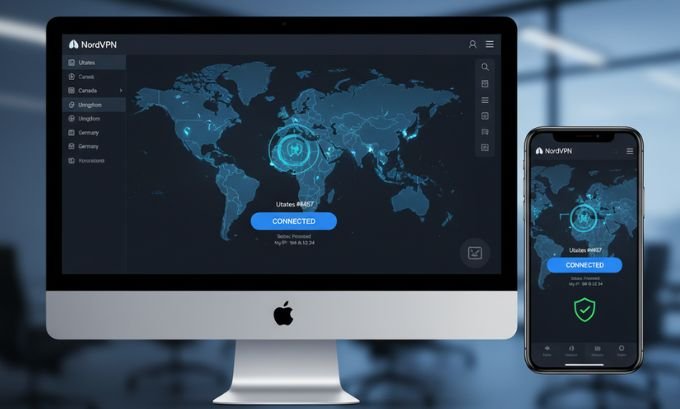
NordVPN is often the first name that comes up in conversations about VPNs, and for good reason. It offers a powerful combination of speed, security, and user-friendly features.
What I Like / Strengths
- Exceptional Speed: Thanks to its proprietary NordLynx protocol (an adaptation of WireGuard), NordVPN consistently ranks as one of the fastest VPNs on the market. During my tests, the speed drop was often less than 10%, which is barely noticeable in daily use.
- Robust Security: It includes features like Threat Protection, which blocks ads, trackers, and malicious files. Its entire network of over 6,000 servers is RAM-only, meaning data is wiped with every reboot.
- Audited No-Logs Policy: NordVPN has undergone multiple independent audits to verify its no-logs claims, adding a strong layer of trust.
- Streaming Powerhouse: Its SmartPlay feature makes it incredibly effective at unblocking a wide range of streaming platforms from around the world.
Areas for Improvement
- Price Point: While it offers great value, it’s not the cheapest option available. The renewal prices can be higher than the initial promotional rate.
- Linux App: The Linux application lacks a graphical user interface (GUI), which can be a hurdle for users who aren’t comfortable with command-line interfaces.
If you want to learn about How to choose a VPN, you can read this article 👉 ponta.in
Surfshark: Best for Multiple Devices and Budgets
Surfshark has made a name for itself by offering a premium experience at a very competitive price point. Its standout feature is unlimited simultaneous connections.
What I Like / Strengths
- Unlimited Connections: This is a huge advantage for families or individuals with many devices. You can protect every gadget in your household with one account.
- Affordable Pricing: Surfshark’s long-term plans are among the most affordable in the industry, making it a fantastic budget-friendly choice.
- CleanWeb Feature: Its built-in ad, tracker, and malware blocker works effectively to clean up your browsing experience.
- Large Server Network: With servers in over 100 countries, it offers one of the most geographically diverse networks available.
Areas for Improvement
- Netherlands Jurisdiction: Its headquarters in the Netherlands, a member of the 9-Eyes intelligence-sharing alliance, raises some privacy concerns. However, its audited no-logs policy and RAM-only servers help mitigate this risk.
- Fewer Advanced Features: Compared to NordVPN, it has slightly fewer niche features for power users.
ProtonVPN: The Champion of Privacy and Transparency
Born from the creators of the secure email service ProtonMail, ProtonVPN is built with Privacy and Security at its core. It’s a top choice for journalists, activists, and anyone who demands the highest level of privacy.
What I Like / Strengths
- Unbeatable Privacy Credentials: Based in Switzerland, which has strong privacy laws, ProtonVPN benefits from a favorable jurisdiction. Its apps are all open-source, allowing anyone to inspect the code.
- Secure Core Architecture: This feature routes your traffic through multiple servers in privacy-friendly countries before it reaches its final destination, making it extremely difficult to trace.
- High-Quality Free Version: ProtonVPN offers one of the best free VPN plans available. While limited, it has no data caps and provides a great way to secure your browsing without a subscription.
- Proven No-Logs Policy: The company has a strong track record and has had its no-logs policy verified by third-party audits.
Areas for Improvement
- Slower Speeds: While its VPN Accelerator feature helps, its speeds can sometimes lag behind competitors like NordVPN and Surfshark.
- Higher Price: The premium plans are more expensive than many rivals, reflecting its focus on advanced security and infrastructure.
Two More Contenders: CyberGhost and ExpressVPN
Two other providers, CyberGhost and ExpressVPN, are also worth considering. Interestingly, both are owned by the same parent company, Kape Technologies. While Kape Technologies once had a controversial past related to malware distribution, both VPNs now operate with audited no-logs policies and are generally considered trustworthy.
CyberGhost: Best for Beginners and Gamers
CyberGhost stands out with its user-friendly interface and specialized servers.
- Optimized Servers: It offers servers specifically optimized for streaming, torrenting, and gaming. The gaming servers are designed to provide low-latency connections, which is a unique perk.
- Affordability: It’s one of the cheapest premium VPNs available, especially on its long-term plans.
- Potential Issues: Some users have reported that the app can be laggy at times and that its kill switch isn’t always perfectly reliable.
ExpressVPN: Best for Router Setups
ExpressVPN is known for its reliability and polished apps, though it comes at a premium price.
- Router Applet: It has a dedicated router app that makes it incredibly easy to set up a VPN on your home router. This protects every device on your network, including smart TVs and game consoles.
- Device Groups Feature: This unique tool lets you assign different server locations to different groups of devices connected to your router.
- High Cost: It is one of the most expensive VPNs on the market, and it offers fewer features than some of its more affordable competitors.
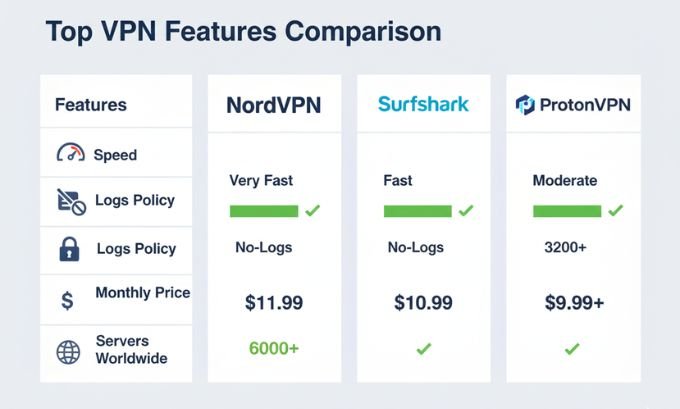
VPN Feature Comparison Table
| Feature | NordVPN | Surfshark | ProtonVPN | CyberGhost | ExpressVPN |
|---|---|---|---|---|---|
| Primary Strength | Speed & Security | Value & Devices | Privacy & Trust | Ease of Use | Reliability |
| Protocol Highlight | NordLynx (WireGuard) | WireGuard | WireGuard | WireGuard | Lightway |
| Simultaneous Devices | 10 | Unlimited | 10 | 7 | 8 |
| “No-Logs” Policy | Audited | Audited | Audited | Audited | Audited |
| Ad Blocker | Yes (Threat Protection) | Yes (CleanWeb) | Yes (NetShield) | Yes | Yes (Threat Manager) |
| Parent Company | Nord Security | Nord Security | Proton AG | Kape Technologies | Kape Technologies |
| Unique Feature | Threat Protection Pro | Unlimited Devices | Secure Core Servers | Gaming Servers | Router App |
Frequently Asked Questions (FAQ)
1. Do I really need a VPN in 2025?
Yes, a VPN is still highly relevant. While HTTPS Encryption is now standard on most websites, it only protects the content of your traffic, not the metadata (like which sites you visit and when). A VPN encrypts all your traffic and hides your IP address, protecting you from tracking by your ISP, public Wi-Fi snoops, and advertisers.
2. Can a VPN make me completely anonymous online?
No, a VPN does not make you completely anonymous. It is a tool for privacy, not anonymity. Your activity can still be tracked through browser cookies, device fingerprinting, and account logins. For a higher level of anonymity, you would need to use a tool like the Tor Browser.
3. Will a VPN slow down my internet connection?
Yes, any VPN will slightly reduce your internet speed because your traffic is being encrypted and rerouted. However, premium providers like NordVPN have optimized their networks and use fast protocols like WireGuard to minimize the impact. In most cases, the slowdown is not noticeable during normal browsing or streaming.
4. Are free VPNs safe to use?
Most free VPNs are not safe. They often have weak security, slow speeds, and data caps. More importantly, many free providers make money by logging your data and selling it to third parties, which defeats the purpose of using a VPN. A reputable free option like the one from ProtonVPN is an exception, but it comes with limitations.
5. Can I use a VPN for streaming?
Absolutely. One of the most popular uses for a VPN is to bypass geo-restrictions on streaming platforms. By connecting to a server in another country, you can access content libraries from services like Netflix, Hulu, and BBC iPlayer that aren’t available in your region.
6. What is a “no-logs” policy and why is it important?
A “no-logs” or “zero-logs” policy is a promise from a VPN provider that it will not collect or store any data about your online activity. This is crucial for Privacy and Security. If a VPN doesn’t have your data, it can’t be sold, stolen in a breach, or handed over to authorities. Always choose a VPN with an independently audited no-logs policy.
Conclusion: Making Your Final Choice
So, how to choose a VPN? The process starts with identifying your needs and ends with selecting a trustworthy provider that meets them.
- If you want the best all-around experience with top speeds and robust security, NordVPN is an outstanding choice.
- If you’re on a budget or need to protect a large number of devices, Surfshark offers incredible value.
- If your absolute top priority is privacy and you want a service with proven transparency, ProtonVPN is the most secure option.
Ultimately, the right VPN is one you can trust to protect your digital life. Take the time to read reviews, compare features, and look for a provider with a proven commitment to user privacy. By doing so, you can browse, stream, and work online with confidence and peace of mind.
