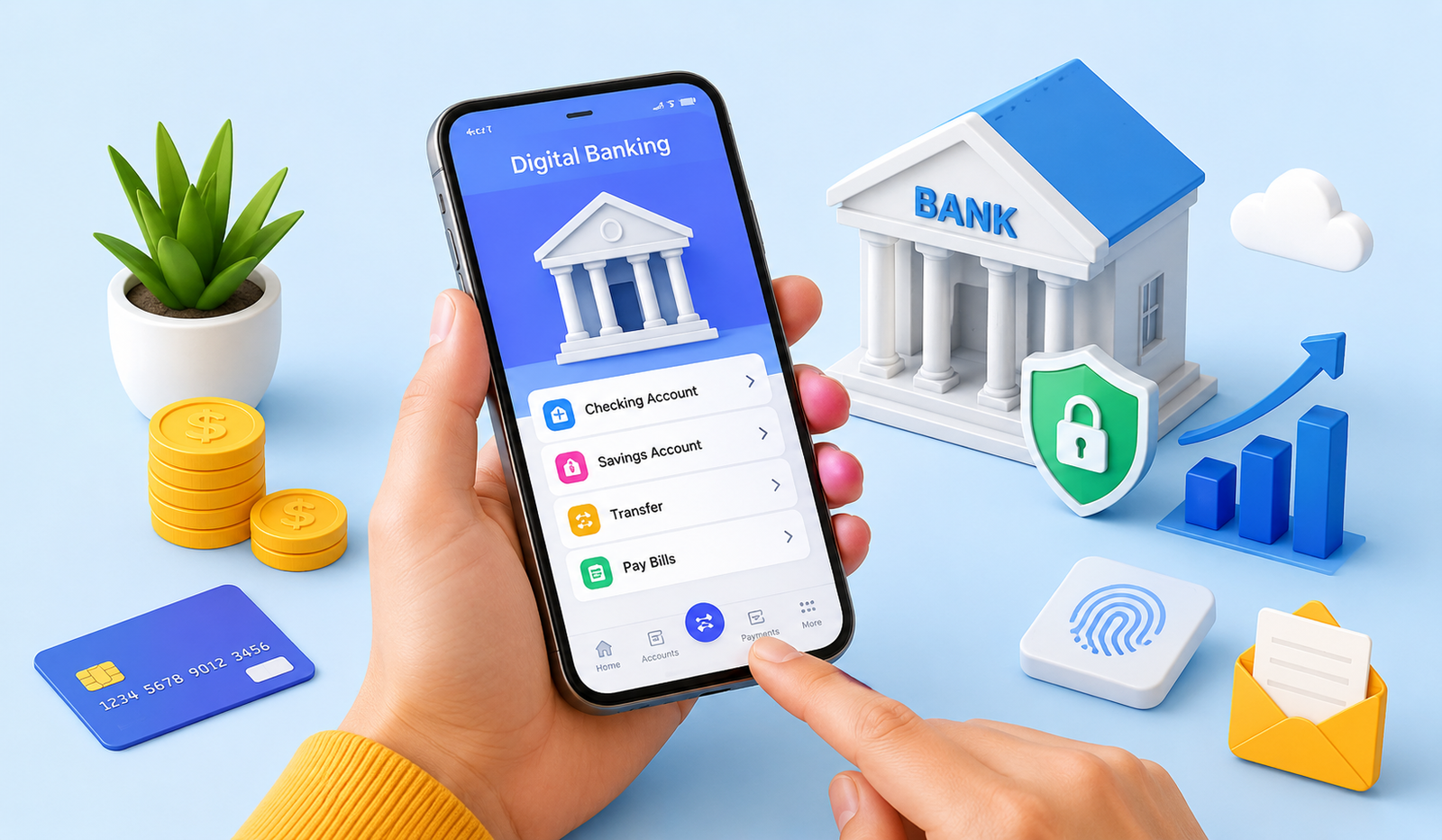
What Is Digital Banking and How Does It Work for Everyday Banking?
Digital banking refers to the digitization of traditional banking services—allowing customers to open accounts, transfer funds, apply for loans, and manage finances entirely online or through a mobile app. Digital banks operate with fewer physical branches, lower fees, and faster service, making them increasingly popular among consumers worldwide.
Managing your money used to mean showing up in person. You’d wait in line, fill out paper forms, and hope the branch closed late enough to fit your schedule. That version of banking still exists—but it’s becoming less relevant by the day.
Digital banking has fundamentally changed the relationship between people and their finances. From mobile-first neobanks like Chime and Revolut to fully digital offerings from established institutions like JPMorgan Chase, the shift toward online financial services is accelerating. According to a 2023 report by the American Bankers Association, mobile banking is now the most preferred banking channel in the United States, with 48% of customers citing it as their primary method.
This post breaks down exactly what digital banking is, how it differs from traditional banking, what benefits and risks it carries, and what the future looks like for consumers and institutions alike. By the end, you’ll have a clear picture of how digital banking works—and whether it makes sense for you.
What Exactly Is Digital Banking, and How Does It Differ From Traditional Banking?
Digital banking is the delivery of banking products and services through digital channels—primarily mobile apps and websites—instead of physical branch networks. At its core, digital banking encompasses everything from checking your account balance online to applying for a mortgage through a mobile app.
The distinction between digital banking and traditional banking comes down to infrastructure and accessibility. Traditional banks rely on a network of physical branches and human staff to deliver services. Digital banks, on the other hand, operate primarily (or entirely) online, passing the cost savings from reduced overhead onto customers in the form of lower fees and higher interest rates.
There’s also an important distinction between digital banks and online banks. Online banks typically offer basic banking products through the internet, while digital banks go further—using artificial intelligence, real-time notifications, automation, and open banking APIs to create a more seamless, personalized financial experience.
What Are the Main Types of Digital Banking Services Available Today?
Digital banking isn’t a single product. The term covers a broad ecosystem of services, each designed to replace or enhance a traditional banking function:
Mobile Banking Apps allow customers to check balances, transfer funds, pay bills, and deposit checks using their smartphones. Major banks like Bank of America and Wells Fargo offer robust mobile apps, while digital-native banks like Ally and Chime have built their entire business model around mobile-first experiences.
Online Account Opening has eliminated one of the biggest barriers to banking access. Customers can now open a checking or savings account in minutes, without visiting a branch or speaking to a representative. This has proven especially important for underbanked populations who lack access to nearby physical locations.
Neobanks and Challenger Banks represent the most disruptive segment of the digital banking market. These are financial technology companies that hold banking licenses (or partner with licensed banks) and operate entirely online. Examples include Revolut, N26, Monzo, and Current. According to Statista, the global neobanking market was valued at approximately $98.4 billion in 2023 and is projected to grow significantly through the decade.
Digital Lending Platforms use algorithms and alternative data to assess creditworthiness faster than traditional lenders. Companies like SoFi and LendingClub have pioneered this model, offering personal loans and refinancing products with approval decisions in minutes rather than days.
Digital Wallets and Contactless Payments sit at the intersection of banking and everyday commerce. Apple Pay, Google Pay, and PayPal allow consumers to transact without physical cards, drawing funds directly from linked bank accounts or credit lines.
What Are the Key Benefits of Digital Banking for Consumers?
The appeal of digital banking isn’t just convenience—though that matters. The advantages span cost savings, financial transparency, and broader access to services that were once reserved for customers with strong credit histories or geographic proximity to branches.
Lower Fees and Better Rates: Without the cost of maintaining physical branches, many digital banks can offer fee-free checking accounts, no minimum balance requirements, and higher annual percentage yields (APYs) on savings accounts. According to Bankrate’s 2024 analysis, several online savings accounts were offering APYs above 5%, compared to the national average of around 0.46% at traditional banks.
24/7 Accessibility: Traditional banks operate within business hours. Digital banks don’t close. This matters more than it might seem—financial emergencies don’t respect a 9-to-5 schedule, and the ability to act on a transaction or flag suspicious activity at any hour reduces both stress and financial risk.
Real-Time Financial Insights: Many digital banking platforms include built-in budgeting tools that categorize spending automatically, send alerts for unusual activity, and provide a real-time view of where money is going. Apps like Chime and Revolut go further, offering savings automation features that round up purchases and transfer the difference to a savings account.
Greater Financial Inclusion: Digital banking has opened access to financial services for populations historically excluded from the traditional system. A 2021 report by the Federal Deposit Insurance Corporation (FDIC) found that 5.9 million U.S. households were unbanked. Mobile banking—requiring only a smartphone and an internet connection—offers a more accessible entry point than a physical branch, particularly for rural communities and low-income households.
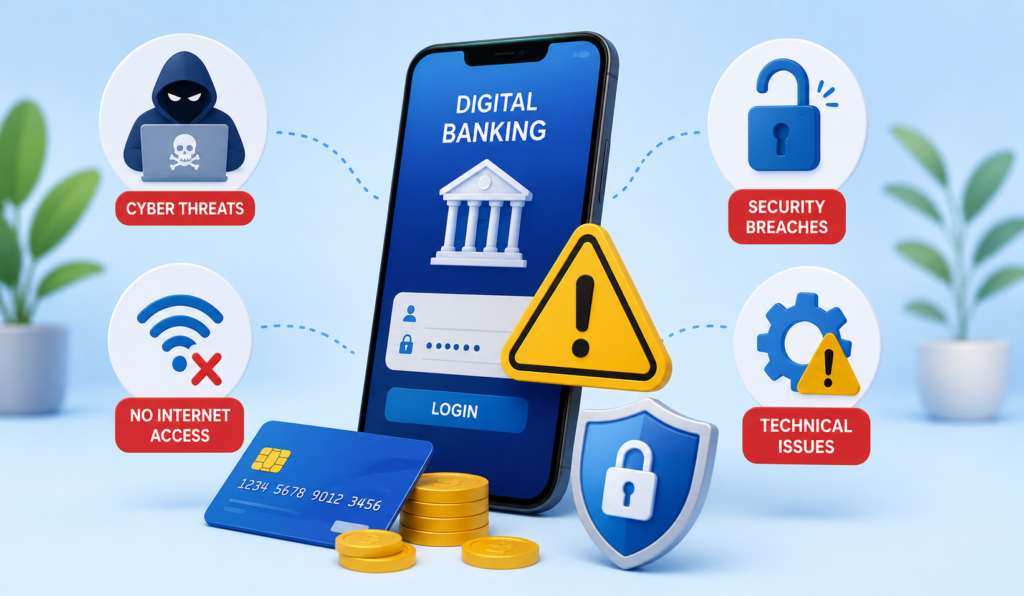
What Are the Risks and Limitations of Digital Banking That Consumers Should Understand?
Digital banking isn’t without trade-offs. Understanding the limitations is just as important as appreciating the benefits.
Cybersecurity and Fraud Risks: The digitization of financial services creates new attack vectors for cybercriminals. Phishing attacks, account takeovers, and identity theft are real threats in the digital banking ecosystem. According to the Federal Trade Commission (FTC), consumers reported losing more than $10 billion to fraud in 2023—a record high. Reputable digital banks mitigate this risk through multi-factor authentication, end-to-end encryption, and biometric login, but users must also practice basic digital hygiene.
Limited In-Person Support: For complex financial needs—estate planning, business banking, mortgage advice—the absence of a human advisor can be a meaningful disadvantage. Many people still prefer face-to-face guidance when navigating major financial decisions, and not all digital banks have caught up with robust customer service options.
Cash Handling Challenges: Digital banks typically don’t operate ATM networks or accept cash deposits. While many reimburse ATM fees and partner with retail networks like Allpoint, customers who regularly handle physical cash may find digital-only banking less practical.
Technology Dependency: If an app goes down or a server fails, access to funds can be temporarily blocked. While outages are rare and brief, they highlight a vulnerability that physical branches—however inconvenient—don’t share.
How Is Artificial Intelligence Transforming the Digital Banking Experience?
Artificial intelligence sits at the center of digital banking’s next chapter. Financial institutions are using AI to automate tasks that once required human judgment, improve fraud detection, and personalize the customer experience at scale.
Fraud detection is perhaps the most mature AI application in banking. Machine learning models analyze thousands of variables in real time—transaction amount, location, device type, time of day—to flag anomalies before they escalate. Banks like HSBC and JPMorgan Chase have deployed AI-based fraud detection systems that have significantly reduced financial losses from unauthorized transactions.
AI-powered chatbots and virtual assistants are also reshaping customer service. Bank of America’s virtual assistant, Erica, has handled over one billion client interactions since its launch, according to Bank of America’s 2023 annual report. These tools handle routine queries instantly, freeing human advisors to focus on complex cases.
Personalized financial guidance is another growing application. Rather than generic savings advice, AI enables banks to analyze individual spending patterns and deliver tailored recommendations—whether that’s suggesting a more suitable credit product, identifying a subscription the customer may have forgotten, or flagging a bill payment date that conflicts with a low balance period.
What Does the Future of Digital Banking Look Like Over the Next Five Years?
Several trends are converging to shape what digital banking looks like beyond 2025.
Open Banking is expanding rapidly, driven by regulatory frameworks in Europe (PSD2) and growing adoption in the United States. Open banking allows customers to share their financial data securely with third-party apps, enabling more integrated financial management tools and increasing competition among providers.
Embedded Finance is blurring the line between banking and other industries. Retailers, ride-sharing platforms, and software companies are increasingly embedding financial products—insurance, buy-now-pay-later options, business banking tools—directly into their platforms. Companies like Shopify and Uber have already launched financial products tailored to their user bases.
Central Bank Digital Currencies (CBDCs) are under active development in over 100 countries, according to the Atlantic Council’s CBDC Tracker. A digital dollar or digital euro would represent a fundamental shift in how governments and central banks interact with retail consumers—potentially bypassing commercial banks for certain transactions.
Sustainability and Ethical Banking are becoming differentiators. A growing segment of consumers—particularly younger generations—are choosing banks based on their environmental policies and investment practices. Digital banks like Aspiration and Triodos have built their entire brand around sustainable finance.
Is Digital Banking Right for You? A Clear Framework for Making the Decision
Choosing between a digital bank and a traditional bank isn’t binary—many consumers use both. A digital bank might handle everyday spending and savings, while a traditional bank manages a mortgage or business account.
Choose digital banking if you prioritize low fees, higher interest rates on savings, and a seamless mobile experience. Choose a traditional bank if you value in-person service, regularly handle cash, or need complex financial products that require human advisory support.
The most important factor is trust. Look for digital banks that are FDIC-insured (in the U.S.), use industry-standard encryption, offer responsive customer support, and have a transparent fee structure. Resources like NerdWallet’s bank reviews and Bankrate can help you compare options side by side.
Frequently Asked Questions About Digital Banking
Is digital banking safe?
Yes, digital banking can be very safe when using a reputable institution that is FDIC-insured and employs multi-factor authentication, biometric login, and end-to-end encryption. Consumers should also use strong, unique passwords and enable account alerts for added protection.
What is the difference between a digital bank and a neobank?
A digital bank can refer to any bank that delivers services primarily through online or mobile channels—including traditional banks with strong digital offerings. A neobank is a fintech company that operates exclusively online, often without a banking license of its own, instead partnering with a licensed bank to hold customer deposits.
Can I deposit cash at a digital bank?
Most digital banks do not accept cash deposits directly. Some partner with retail networks (such as Green Dot locations) to allow cash deposits, but this is not universal. If you regularly deal with cash, a hybrid approach—using both a digital and a traditional bank—may work better.
Are digital banks FDIC-insured?
Most reputable digital banks in the United States offer FDIC insurance, either directly or through a partner bank. This means deposits are insured up to $250,000 per depositor, per institution. Always verify FDIC status before opening an account using the FDIC’s BankFind tool.
What happens if a digital bank goes out of business?
If a digital bank fails and is FDIC-insured, customer deposits are protected up to $250,000. The FDIC typically transfers accounts to another insured institution, minimizing disruption to customers.
Who benefits most from switching to a digital bank?
Digital banking tends to benefit consumers who are comfortable managing finances online, want to avoid monthly fees, or are looking for higher APYs on savings. It’s particularly valuable for people who live in areas with limited branch access or those looking for faster, more transparent financial tools.
