
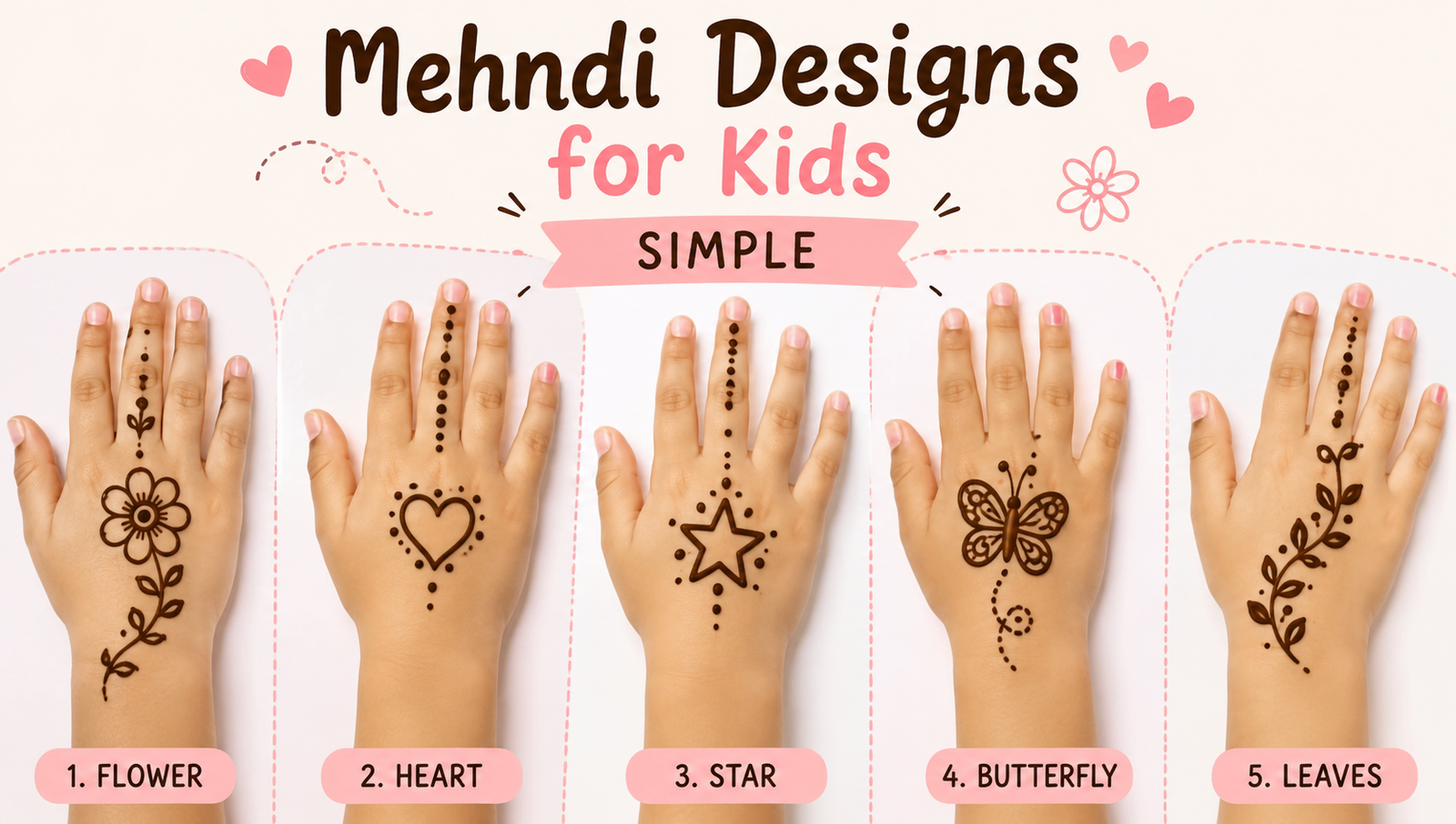
Watching adults apply intricate henna patterns often leaves children eager to join in on the fun. Little hands look adorable with delicate mehndi, and kids love feeling included in festive preparations. Finding the right design is key to making the experience enjoyable for everyone. Children rarely have the patience to sit still for hours, and their energetic nature means complex patterns are likely to smudge before they even dry.
The best approach is to choose simple, quick-to-apply designs that capture their imagination without requiring them to remain motionless for long periods. A few well-placed flowers, stars, or geometric shapes can look stunning and take only minutes to create. This keeps the process fun and minimizes the stress of ruined designs.
Applying mehndi on a child also requires a focus on safety. Children have sensitive skin that can react differently to various pastes. Understanding which types of henna to use, how to prepare the skin, and the best ways to care for the stain will ensure a safe and beautiful result. This guide covers everything you need to know about kid-friendly mehndi, from safety tips to specific design ideas.
Why Keep It Simple?
When it comes to children, simplicity is your greatest asset. Intricate bridal-style mehndi requires immense concentration and stillness. Kids simply want to play, eat, and move around.
Shorter Application Time
A basic design takes only five to ten minutes. This short window fits perfectly within a young child’s attention span. You can complete a cute floral motif on the back of their hand before they even realize you are finishing up.
Less Risk of Smudging
The longer a design takes to dry, the higher the chance of it being ruined by a sudden movement. Simple designs use thinner lines and less paste, allowing the henna to dry much faster. This reduces the likelihood of wet paste ending up on their clothes, their face, or your furniture.
Comfort and Ease
Heavy mehndi can feel cold and slightly heavy on the skin. A light, airy design feels much more comfortable for a child who might be experiencing henna for the very first time.
Top Simple Mehndi Design Ideas for Kids
You do not need to be a professional artist to create beautiful henna patterns for young ones. Here are several popular and incredibly simple mehndi designs for kids.
The Classic Floral Motif
Flowers are universally loved and incredibly easy to draw. A single, large daisy-like flower in the center of the palm or on the back of the hand looks elegant. You can add a few simple leaves or vines extending toward the index finger. This design is quick, recognizable, and always a favorite among children.
Stars and Moons
Night sky elements are magical and straightforward. Drawing a crescent moon accompanied by a few scattered stars is perfect for Eid celebrations or casual parties. You can fill the stars with tiny dots or leave them as outlines. This pattern requires very little paste, ensuring a rapid drying time.
Cute Animals and Insects
Children adore animals. A simple butterfly with symmetrical wings is a massive hit. You can also try drawing a small ladybug, a tiny bird, or even a stylized fish. These playful designs resonate with their interests and make the henna application feel like a fun art project.
Mini Mandalas
A mandala sounds complex, but a miniature, simplified version is quite easy. Start with a small circle in the center of the hand, surround it with dots, and add one layer of scalloped petals. It looks traditional but only takes a few minutes to complete.
Bracelet and Ring Patterns
Instead of covering the palm, focus on the wrist and fingers. A simple band of geometric shapes around the wrist mimics a bracelet. Adding small dots or zig-zags on the fingers creates the illusion of wearing rings. This keeps the palm completely free, which is great for kids who tend to touch their faces frequently.
Prioritizing Safety: Choosing the Right Henna
The most critical aspect of applying mehndi on children is the type of paste you use. A child’s skin is much more delicate than an adult’s, making them more susceptible to irritation and allergic reactions.
Avoid Black Henna at All Costs
Never use “black henna” on a child. This product often contains a toxic chemical called PPD (paraphenylenediamine), which is used in hair dye. PPD can cause severe allergic reactions, chemical burns, blistering, and lifelong scarring. If a cone promises a dark stain in under an hour, it likely contains dangerous chemicals.
Opt for Natural, Organic Henna
Always choose 100% natural henna powder mixed with safe ingredients like water, lemon juice, and sugar. Natural henna paste has an earthy smell, resembling tea or cut grass, and takes time to develop a stain. The resulting color will be a shade of orange, red, or brown, never pitch black.
Perform a Patch Test
Even natural ingredients can cause mild irritation in children with highly sensitive skin. Apply a tiny dot of henna on the inside of the child’s wrist and wait for twenty minutes. If there is no redness, itching, or swelling after removal, the paste is generally safe to use.
Tips for a Smooth Application Process
Preparing for the application will make the experience much smoother for both the artist and the child.
Keep Them Entertained
Distraction is a powerful tool. Put on their favorite movie, hand them a tablet, or have someone read them a story while you work. If their mind is occupied, their hands will naturally stay still.
Have Supplies Ready
Gather your henna cone, some tissue paper, and a damp cloth before you begin. If you make a mistake, you need to wipe it away immediately before it stains. Having everything within reach prevents you from having to step away.
Use the Sugar and Lemon Sealant Carefully
Adults often dab a mixture of lemon juice and sugar over dried henna to keep it stuck to the skin. While effective, this makes the hands incredibly sticky. A sticky child is a recipe for disaster. If you choose to use a sealant, apply it very sparingly, or skip it altogether for younger children.
Gentle Aftercare and Removal
Once the henna is dry, it needs to be removed properly to ensure a good stain without hurting the skin.
Scraping, Not Washing
Instruct the child not to wash their hands with soap and water immediately. Instead, gently scrape the dried paste off using a butter knife or your fingernails. Water can interrupt the oxidation process, leading to a much lighter stain.
Applying Natural Oils
After scraping off the paste, rub a little bit of coconut oil or olive oil over the design. This helps protect the fresh stain from water and keeps the skin moisturized.
Fading Naturally
Henna fades naturally as the skin exfoliates. If you need to remove the design quickly for school, soaking the hands in warm soapy water and gently scrubbing with a washcloth will speed up the fading process.
Frequently Asked Questions
How long does a natural henna stain last on a child?
Because children wash their hands frequently and are highly active, mehndi usually fades faster on them than on adults. You can expect a natural henna stain to last anywhere from three to seven days.
Can I use store-bought cones for my kids?
You can use store-bought cones only if you can verify the ingredients. Many commercially available cones contain artificial dyes and chemical preservatives. Purchasing handmade cones from a reputable natural henna artist is the safest route for children.
At what age is it safe to apply mehndi on a child?
Most natural henna artists recommend waiting until a child is at least three years old. Infants and toddlers have highly absorbent and sensitive skin, and they are also more likely to put their hands in their mouths.
Make Your Next Henna Session a Breeze
Applying mehndi should be a joyful bonding experience, not a test of patience. By selecting basic, kid-friendly motifs and prioritizing natural, chemical-free paste, you guarantee a safe and delightful outcome. Gather your supplies, pick a fun design together, and enjoy the creative process with your little ones.
