
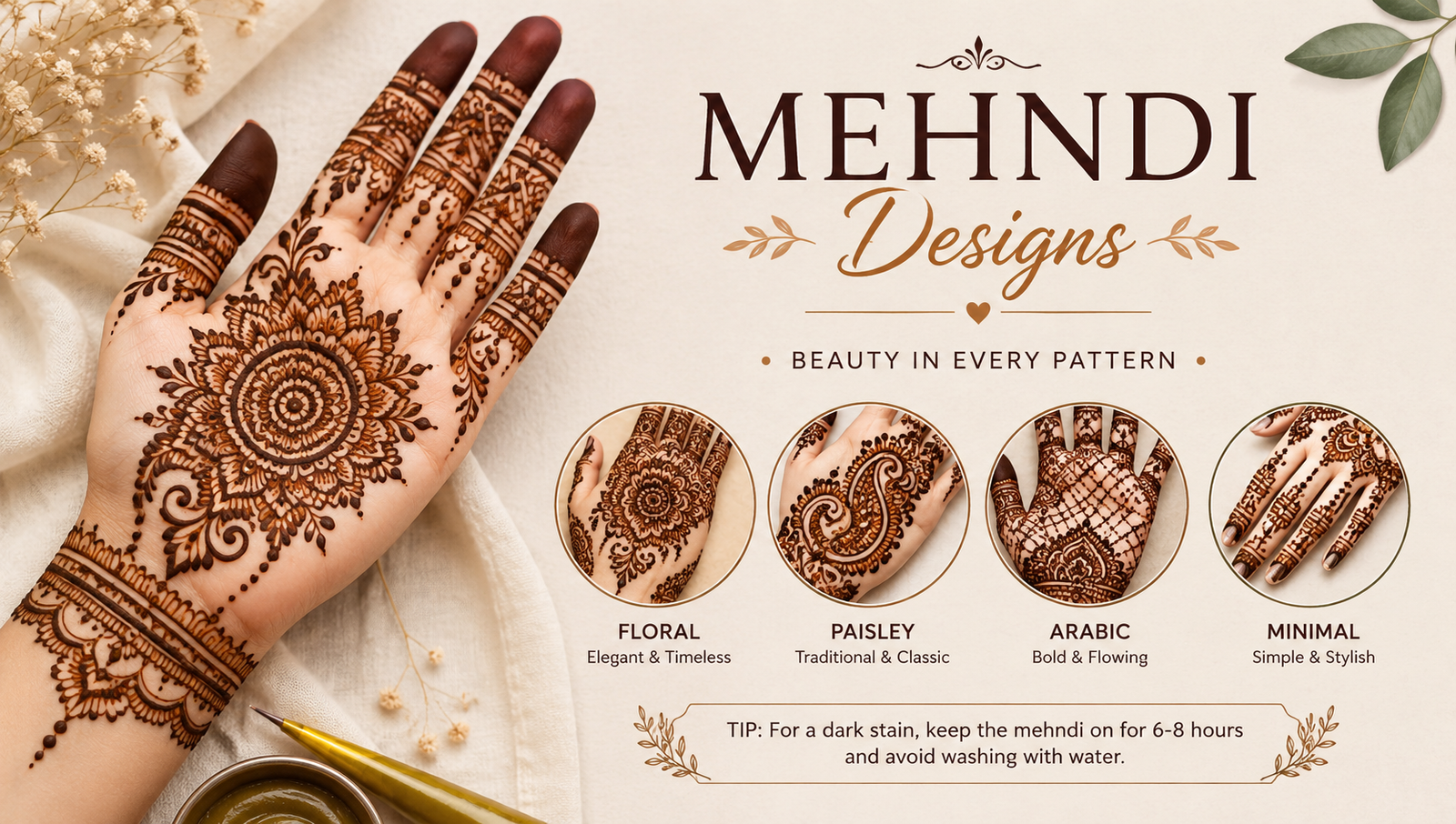
Mehndi design is an ancient art form that has captivated people for centuries. Derived from the Sanskrit word “mendhika,” the practice of applying henna paste to the body creates intricate, temporary tattoos that carry deep cultural significance. From lavish weddings to vibrant religious festivals, these beautiful patterns celebrate joy, luck, and community.
Choosing a design or learning how to apply it can feel overwhelming for beginners. The sheer variety of styles, techniques, and preparation methods means there is a lot to learn. You might wonder how to achieve that highly coveted dark stain, or which cultural style best matches your upcoming event.
This guide covers everything you need to know about mehndi design. We will explore the rich history behind the art, break down the most popular regional styles, and provide a step-by-step tutorial for applying henna at home. You will also find expert tips on making your design last longer and answers to the most common questions about the process.
The Cultural Roots and History of Mehndi
The tradition of applying henna dates back over 5,000 years. Early records suggest its use originated in the deserts of North Africa and the Middle East. People discovered that the leaves of the Lawsonia inermis plant, when crushed into a paste, offered a natural cooling effect. Smearing this paste on the palms of the hands and soles of the feet helped regulate body temperature in scorching desert climates.
Over time, this practical application evolved into an ornamental art. As the cooling paste left a reddish-brown stain on the skin, people began drawing specific shapes and patterns instead of simply coating their hands. The practice traveled across trade routes, eventually becoming deeply rooted in the cultures of the Indian subcontinent.
Today, mehndi serves as a symbol of positive spirits and good fortune. Many cultures consider the application process a sacred ritual. The intricate patterns often represent health, fertility, and wisdom, transforming a simple plant extract into a profound cultural touchstone.
Popular Styles of Mehndi Design
As henna traveled across different continents, various regions developed their own distinct application styles. Each style carries unique characteristics, motifs, and spacing techniques.
Indian Mehndi Designs
Indian mehndi is famous for its incredible detail and density. These designs typically cover the entire hand, forearm, foot, and calf, leaving very little empty space on the skin. The patterns often feature fine lines, lacy details, and traditional motifs like peacocks, mango leaves (paisley), and lotus flowers.
During weddings, Indian bridal designs frequently incorporate the initials or names of the couple hidden within the complex artwork. The sheer complexity of Indian styles requires a steady hand and significant time, often taking several hours to complete for a bride.
Arabic Mehndi Designs
Arabic mehndi designs take a much more minimalist and free-flowing approach. Instead of covering the entire surface of the skin, Arabic styles utilize empty space to make the patterns pop. These designs usually feature large floral motifs, vines, and leaves that trail diagonally from the tip of the index finger down to the wrist.
Because the patterns are larger and less intricate than Indian styles, Arabic mehndi is generally much faster to apply. This makes it a popular choice for casual events or for those who want a beautiful design without sitting for hours.
Pakistani Mehndi Designs
Pakistani mehndi represents a beautiful blend of Indian and Arabic styles. It combines the complex, detailed filling of Indian designs with the bold, flowing outlines found in Arabic art. You will often see striking geometric shapes alongside traditional mandalas and floral patterns.
The contrast between the thick outlines and the delicate internal shading gives Pakistani mehndi a unique, three-dimensional appearance. It is highly sought after for major celebrations and weddings due to its balanced, elegant look.
Moroccan Mehndi Designs
Moroccan mehndi stands out because it rarely uses floral or animal motifs. Instead, it relies heavily on geometric shapes, lines, and diamond patterns. This style is deeply connected to local superstitions and traditions, with specific shapes meant to ward off the evil eye and bring fertility.
The designs are often more unisex in appearance compared to the highly feminine floral styles of other regions. The bold, symmetrical lines create a striking aesthetic that appeals to those looking for something distinct and modern.
Western and Modern Fusion
As henna gained popularity in Western countries, contemporary artists started blending traditional techniques with modern aesthetics. White henna—which is actually a body-safe adhesive paint rather than natural henna—has become a trendy alternative for music festivals and temporary fashion statements.
Fusion designs might incorporate minimalist line art, celestial shapes like moons and stars, or even exact replicas of permanent tattoo styles. This modern approach proves that mehndi is a living, breathing art form that continues to evolve.
Essential Occasions for Mehndi Art
While you can apply henna any day of the year, specific celebrations have strong historical ties to the practice.
Weddings and Bridal Mehndi
In South Asian and Middle Eastern cultures, the Mehndi ceremony is a cornerstone of the wedding festivities. Held a day or two before the actual wedding, this colorful event gathers the bride’s female friends and family members. Professional artists apply intricate bridal designs to the bride’s arms and legs.
According to tradition, the darkness of the bride’s henna stain represents the depth of love in her marriage, or the level of affection she will receive from her mother-in-law. The bride is also forbidden from doing any housework until her wedding mehndi has completely faded away.
Festivals and Holidays
Festivals bring communities together, and mehndi plays a vital role in these gatherings. During Diwali (the Hindu festival of lights), women adorn their hands with bright patterns to welcome prosperity. Similarly, Muslims celebrate Eid al-Fitr and Eid al-Adha by wearing new clothes and applying fresh henna designs.
Karwa Chauth, a festival where married Hindu women fast for the safety and longevity of their husbands, is another occasion heavily associated with henna. Women gather in groups to apply intricate patterns, sharing stories and celebrating their bonds.
How to Apply Mehndi: A Step-by-Step Guide for Beginners
Creating your own mehndi design at home is a rewarding experience. With a little practice and the right preparation, anyone can master the basics.
Preparing the Henna Paste
For the safest and most vibrant results, use 100% natural henna powder. Mix the powder with lemon juice or strong brewed black tea until it reaches the consistency of thick yogurt. Add a few drops of essential oil, like eucalyptus or lavender, to help release the dye.
Cover the mixture with plastic wrap, pressing the wrap directly against the surface of the paste to prevent a crust from forming. Let the mixture sit in a warm place for 8 to 12 hours. Once the dye has released, scoop the paste into a plastic cone or applicator bottle.
Prepping Your Skin
Henna binds best to clean, dry skin. Wash the area thoroughly with soap and water to remove any lotions, oils, or dead skin cells. Avoid using moisturizers before application, as they create a barrier that prevents the dye from penetrating the skin.
Creating the Design
Start with simple shapes. Practice drawing basic lines, dots, and teardrops on a piece of paper before moving to the skin. When you are ready, gently squeeze the cone to push the paste out. Maintain a steady, even pressure.
Begin your design at the center of the hand or wrist and work your way outward to avoid smudging the wet paste. Keep a damp cotton swab nearby to quickly wipe away any mistakes.
Pro Tips for Achieving a Dark and Long-Lasting Stain
The beauty of a mehndi design largely depends on the richness of the final stain. Natural henna requires careful aftercare to reach its full potential.
- Leave the paste on as long as possible: Aim for a minimum of four to six hours. Many people prefer to sleep with the paste on, wrapping the area lightly in toilet paper or a loose sock to prevent flakes from getting on their sheets.
- Use a lemon-sugar sealant: Once the paste dries on your skin and begins to crack, dab a mixture of lemon juice and sugar over the design using a cotton ball. The stickiness keeps the paste adhered to your skin longer, allowing more dye to transfer.
- Avoid water: When it is time to remove the paste, do not wash it off with water. Gently scrape the dried henna off with a blunt butter knife or your fingernails. Keep the area away from water for the next 12 to 24 hours while the stain oxidizes and darkens.
- Moisturize naturally: After scraping off the paste, massage a natural balm or coconut oil into the skin. This protects the fresh stain and keeps the skin hydrated, which prevents rapid exfoliation.
Frequently Asked Questions About Mehndi Design
How long does a mehndi design last?
A natural henna stain typically lasts between one to three weeks. The longevity depends on several factors, including how often you wash the area, your skin’s natural exfoliation rate, and the quality of the henna paste used.
Is black henna safe for the skin?
No. Black henna often contains a dangerous chemical called para-phenylenediamine (PPD), which is typically found in hair dye. PPD can cause severe allergic reactions, chemical burns, and permanent scarring when applied directly to the skin. Always use natural, plant-based henna, which smells earthy and leaves a reddish-brown stain.
Can I freeze leftover henna paste?
Yes! If you have leftover natural henna paste, place the sealed cone in the freezer. It will keep its staining power for up to six months. When you want to use it again, simply let it thaw at room temperature for about an hour.
Embrace the Art of Henna
Mehndi design is much more than a temporary beauty trend. It is a profound expression of culture, art, and celebration that connects us to centuries of human history. By understanding the different regional styles, you can choose patterns that truly resonate with your personal aesthetic and the occasion at hand.
Now that you know the basics of preparation, application, and aftercare, you are ready to experiment with this beautiful medium. Gather some natural henna, find a comfortable workspace, and start practicing your own intricate designs today.
