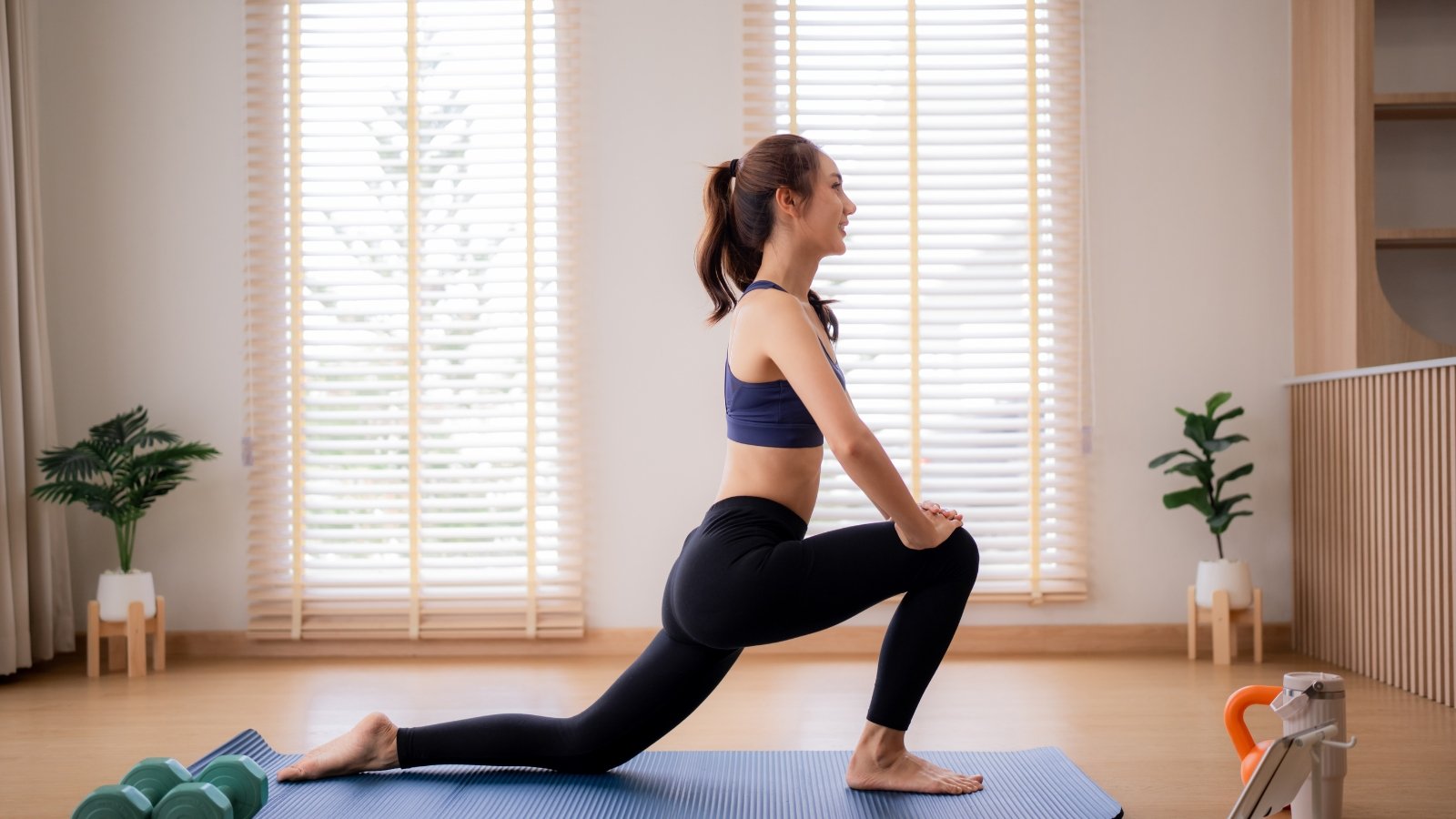
Home workouts for beginners involve simple, equipment-free exercises—like bodyweight squats, push-ups, and planks—done consistently at home. Starting with 20–30 minutes, three times per week is enough to build strength, improve fitness, and establish a lasting habit without needing a gym membership.
Getting fit doesn’t require a gym membership, expensive equipment, or hours of free time. For most people starting out, the biggest barrier isn’t access—it’s knowing where to begin. The options feel overwhelming: cardio or strength training? How many days per week? What if your form is wrong?
This guide cuts through that noise. You’ll learn how to structure a beginner home workout routine, which exercises to start with, how to avoid the most common mistakes, and how to build consistency over time. Everything here is grounded in straightforward exercise principles, designed for someone with little to no training experience.
Table of Contents
Why home workouts work for beginners
Home workouts are genuinely effective—not just as a stopgap until you can get to a gym, but as a long-term fitness strategy. According to a 2021 study published in the International Journal of Environmental Research and Public Health, home-based exercise programs produced similar improvements in cardiovascular fitness and muscle strength compared to gym-based programs, when effort and consistency were matched.
The main advantage for beginners is convenience. Removing the commute, the cost, and the social anxiety of exercising in public makes it far easier to show up consistently. And consistency, more than any specific workout, is what drives results.
You don’t need any equipment to start. Your own bodyweight provides enough resistance to build strength, improve endurance, and increase mobility—especially in the early months of training.
How to structure a beginner home workout routine
A well-structured routine balances effort and recovery. For most beginners, three sessions per week with rest days in between is a solid starting point. This gives your muscles time to repair and adapt between sessions.
Each session should follow a simple three-part structure:
- Warm-up (5–10 minutes): Light movement that gradually raises your heart rate and loosens your joints. March in place, do arm circles, or move through gentle dynamic stretches.
- Main workout (20–30 minutes): A mix of strength and cardiovascular exercises. More on specific exercises below.
- Cool-down (5 minutes): Slow, static stretches held for 20–30 seconds each to help your muscles recover and reduce soreness.
As your fitness improves, you can add a fourth session, extend your workout time, or increase exercise difficulty. But for the first four to six weeks, keep it simple and prioritize showing up over pushing hard.
What exercises should beginners do at home?
The best beginner exercises use multiple muscle groups at once, require no equipment, and can be scaled to different fitness levels. The following exercises form a solid foundation for any beginner home workout.
Bodyweight squats
How it works: Stand with your feet shoulder-width apart, lower your hips toward the floor as if sitting back into a chair, then return to standing. Keep your chest upright and your knees tracking over your toes.
What it trains: Quads, hamstrings, glutes, and core.
Beginner modification: Hold onto a chair for balance, or only lower halfway until your strength and mobility improve.
Push-ups
How it works: Start in a plank position with your hands slightly wider than shoulder-width. Lower your chest toward the floor, then push back up.
What it trains: Chest, shoulders, triceps, and core.
Beginner modification: Drop to your knees to reduce the load. As you get stronger, work toward full push-ups on your toes.
Glute bridges
How it works: Lie on your back with your knees bent and feet flat on the floor. Press through your heels to lift your hips until your body forms a straight line from shoulders to knees, then lower back down.
What it trains: Glutes, hamstrings, and lower back.
Why it matters for beginners: Many people who sit for long periods have underactive glutes. Glute bridges help reactivate those muscles and reduce lower back discomfort.
Plank
How it works: Hold a push-up position, either on your hands or forearms, keeping your body in a straight line from head to heels. Hold for 20–30 seconds to start.
What it trains: Core, shoulders, and back.
Beginner modification: Hold for 10 seconds at a time, rest, and repeat. Gradually build up your hold time as your endurance improves.
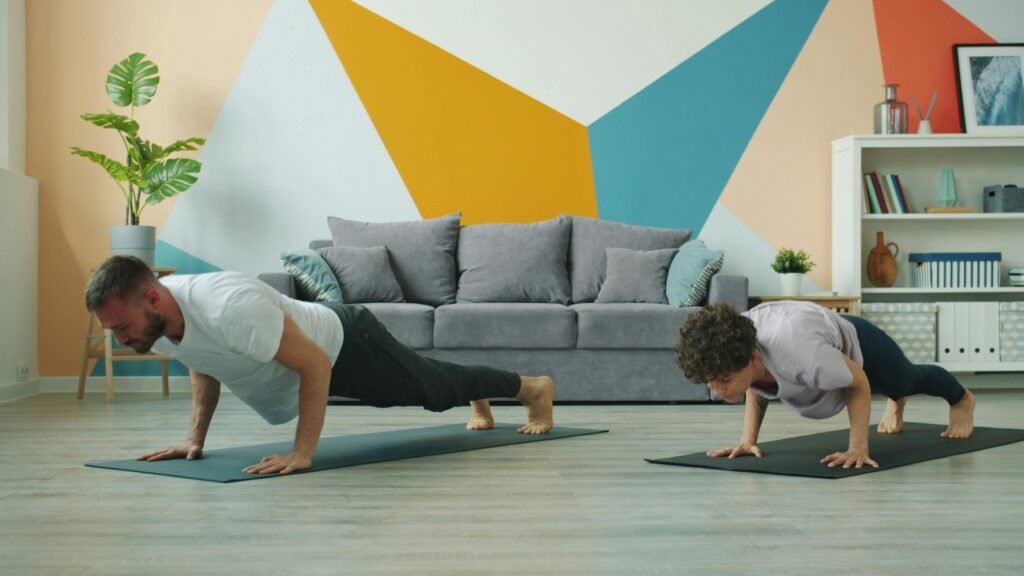
Mountain climbers
How it works: Start in a high plank position. Drive one knee toward your chest, return it, then repeat on the other side, alternating quickly.
What it trains: Core, cardiovascular system, hip flexors, and shoulders.
Why it works for beginners: Mountain climbers combine strength and cardio in one move, making them an efficient choice when time is limited.
Reverse lunges
How it works: Stand tall, step one foot back and lower your back knee toward the floor, then return to standing. Alternate legs.
What it trains: Quads, glutes, hamstrings, and balance.
Beginner modification: Use a wall or chair for stability while your balance improves.
A sample beginner home workout
Here’s a straightforward 25-minute workout you can do three times per week. No equipment required.
Warm-up (5 minutes)
- March in place: 1 minute
- Arm circles (forward and backward): 1 minute
- Leg swings (holding a wall for balance): 1 minute
- Hip circles: 1 minute
- Gentle torso twists: 1 minute
Main workout — 3 rounds of the following circuit:
- Bodyweight squats: 12 reps
- Push-ups (or knee push-ups): 8–10 reps
- Glute bridges: 12 reps
- Plank hold: 20–30 seconds
- Mountain climbers: 20 reps (10 per side)
- Reverse lunges: 10 reps (5 per side)
Rest for 60–90 seconds between rounds.
Cool-down (5 minutes)
- Seated hamstring stretch: 30 seconds per leg
- Hip flexor stretch (kneeling lunge): 30 seconds per side
- Child’s pose: 30 seconds
- Chest opener (arms clasped behind your back): 20 seconds
This routine takes about 25 minutes from start to finish. Three sessions per week is enough to see meaningful progress within four to six weeks.
Home workouts are effective, but combining them with regular walking can accelerate your results. Check out our guide on how walking can help you lose weight for additional tips.
How to avoid the most common beginner mistakes
Starting with good habits saves you from setbacks later. These are the mistakes most beginners make—and how to avoid them.
Doing too much too soon. Soreness after your first few sessions can feel encouraging, but consistently pushing to exhaustion slows your progress and raises your injury risk. Studies suggest that moderate-intensity training, where you finish a session feeling challenged but not depleted, produces better long-term results than maximum effort every session.
Skipping the warm-up. Cold muscles are less pliable and more prone to strain. Even five minutes of light movement meaningfully reduces your injury risk and improves performance during the workout itself.
Prioritizing intensity over form. Moving through exercises quickly and sloppily does less for your muscles and more for your injury risk. Slow down, focus on control, and increase speed or reps only once your form is solid.
Expecting results in a week. Visible changes in body composition typically take eight to twelve weeks of consistent training. Strength improvements often come sooner—many beginners notice they can do more reps or hold planks longer within two to three weeks—but patience is essential.
Neglecting rest days. Muscle growth and cardiovascular adaptation happen during recovery, not during the workout itself. Rest days are not wasted days.
Combining regular exercise with one of the best sports for fitness can help you stay motivated and achieve your long-term health goals.
How to stay consistent with a home workout routine
Consistency is the single most important variable in fitness. The best workout routine is one you actually follow.
A few strategies that make consistency more likely:
- Schedule your sessions like appointments. Pick three specific times in your week and treat them as fixed. Research from the British Journal of Health Psychology found that people who made specific plans about when and where they would exercise were significantly more likely to follow through.
- Start smaller than you think you need to. A 20-minute workout done consistently beats a 60-minute workout done twice and then abandoned. Lower the bar at the start.
- Track your progress. Write down how many reps you complete each session. Watching those numbers improve is genuinely motivating and helps you see how far you’ve come.
- Reduce friction. Keep your workout clothes out the night before. Clear a small space in your home so you’re not moving furniture every time you exercise.
- Expect imperfect weeks. Missing a session doesn’t mean your routine has failed. One missed workout has no meaningful effect on your fitness. Just return to your schedule the following day.
When should you progress beyond a beginner routine?
Most people are ready to progress after six to eight weeks of consistent training. Signs you’re ready include completing all three rounds of your workout with energy to spare, feeling little to no muscle soreness after sessions, and holding a 30-second plank without difficulty.
At that point, you can increase challenge in several ways: add more reps, reduce rest time between rounds, try harder exercise variations (full push-ups instead of knee push-ups, jump squats instead of bodyweight squats), or add a fourth training day. If you want to continue without equipment, you can also explore more advanced bodyweight programs—many of which are freely available online.
Your next steps start with one session
Getting started is straightforward. Clear a space, set a 25-minute timer, and work through the sample routine above. You don’t need to feel ready—readiness comes from doing, not from planning.
If you have an existing health condition, injury, or haven’t exercised in a long time, talk to your doctor before starting. For most otherwise healthy adults, beginning a moderate home workout routine is low-risk and high-reward.
The goal in the first few weeks isn’t transformation. The goal is to show up consistently, move your body, and build a habit. Everything else follows from that.
Frequently asked questions about home workouts for beginners
How many days per week should a beginner work out at home?
Three days per week is the recommended starting point for most beginners. This provides enough stimulus to build strength and fitness while leaving adequate time for recovery. After six to eight weeks of consistent training, you can consider adding a fourth session.
Can you build muscle with home workouts and no equipment?
Yes. Bodyweight exercises like push-ups, squats, and glute bridges create sufficient mechanical load to stimulate muscle growth, particularly for beginners. Studies suggest that muscle protein synthesis—the process your body uses to build muscle—is triggered by any resistance that challenges your muscles close to their current capacity, whether that resistance comes from weights or your own bodyweight.
How long should a beginner home workout be?
Twenty to thirty minutes is a practical and effective session length for beginners. Short enough to fit into most schedules, long enough to meaningfully challenge your cardiovascular system and major muscle groups. As your fitness improves, you can extend sessions to 40–45 minutes.
What should I eat before a home workout as a beginner?
A light meal or snack containing carbohydrates and some protein, eaten one to two hours before your workout, provides enough energy for a 20–30 minute session. Examples include a banana with peanut butter, Greek yogurt with fruit, or a small bowl of oatmeal. Avoid heavy meals immediately before exercising.
How long before I see results from a home workout routine?
Strength gains—like completing more reps or holding a plank longer—often appear within two to three weeks. Visible changes in body composition typically take eight to twelve weeks of consistent training. Individual results vary based on starting fitness level, diet, sleep, and how regularly you train.
Is it normal to feel sore after my first few home workouts?
Yes. Delayed onset muscle soreness (DOMS)—a dull ache that appears 24–48 hours after exercise—is a normal response to new physical activity. It typically decreases as your body adapts over the first two to three weeks. Light movement on rest days, like walking or gentle stretching, can help reduce soreness.
