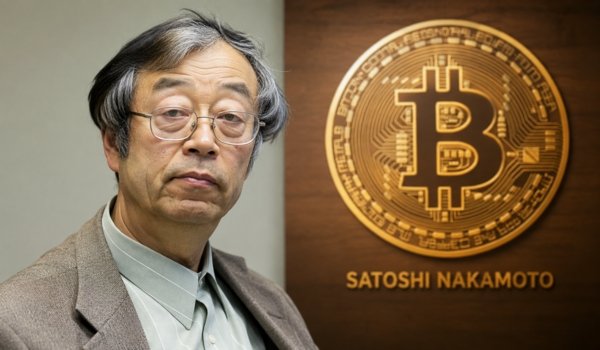
Satoshi Nakamoto is the pseudonymous individual or group who created Bitcoin and authored the original Bitcoin whitepaper in 2008. Despite launching the world’s most valuable cryptocurrency, Nakamoto’s true identity has never been confirmed. Nakamoto disappeared from online activity in 2011, leaving behind a financial revolution and one of technology’s most enduring mysteries.
There are inventors who change an industry. Then there are those who change the entire concept of money. Satoshi Nakamoto belongs to the second category — and no one knows who Satoshi Nakamoto actually is.
Since the Bitcoin whitepaper was published on October 31, 2008, the name “Satoshi Nakamoto” has become one of the most searched, debated, and mythologized identities in the history of technology. Nakamoto gave the world a decentralized digital currency that now commands a market capitalization measured in the trillions, then quietly vanished from public life in 2011 — leaving no verified trace of their real identity.
This post explores who Satoshi Nakamoto is (or might be), what Nakamoto created, why the mystery persists, and why it continues to shape how we think about technology, finance, and trust. By the end, you’ll have a thorough understanding of Bitcoin’s origin story, the leading theories about Nakamoto’s identity, and the lasting impact of a person or group who chose anonymity over fame at the exact moment when fame was theirs for the taking.
What Did Satoshi Nakamoto Actually Create and Why Did It Matter So Much?
On October 31, 2008, a whitepaper titled Bitcoin: A Peer-to-Peer Electronic Cash System was posted to a cryptography mailing list. It was signed by Satoshi Nakamoto. The paper proposed a system for conducting financial transactions directly between two parties — without a bank, government, or any central authority involved.
This was not a minor technical proposal. For centuries, financial systems had been built on the premise that trust required an intermediary. You trusted your bank to hold your money. You trusted card networks to process payments. You trusted governments to back the value of currency. Nakamoto’s whitepaper asked a simple, radical question: what if the system itself could be the trusted party?
The answer was the blockchain — a distributed ledger that records every transaction across a network of computers simultaneously, making it nearly impossible to alter or falsify records without consensus from the entire network. Bitcoin, the currency built on this blockchain, launched on January 3, 2009. The first block ever mined — known as the “genesis block” — contained an embedded message referencing a newspaper headline about bank bailouts. It was a pointed political statement disguised as a timestamp.
Nakamoto mined the early Bitcoin blocks personally, accumulating an estimated 1.1 million BTC that has never been moved from its original wallet. At Bitcoin’s peak valuations, that holding has been worth over $70 billion — making Nakamoto one of the wealthiest people on Earth, at least on paper, and perhaps the only billionaire who has never spent a cent of their fortune.
If you want to understand how Bitcoin fits into the broader cryptocurrency landscape today, TechBullion’s guide to What Is Cryptocurrency? offers a solid foundation.
Who Are the Most Credible Candidates for the True Identity of Satoshi Nakamoto?
This is the question that journalists, cryptographers, and amateur sleuths have been trying to answer for over fifteen years. The honest answer is that no one has ever provided definitive proof. But several names have emerged as more credible than others, and the reasoning behind each is worth examining.
Hal Finney was a cryptographer and cypherpunk who received the very first Bitcoin transaction from Nakamoto on January 12, 2009. Finney was technically brilliant, deeply interested in digital currencies, and lived in California near an individual named Dorian Nakamoto — a coincidence that fueled some speculation. Finney consistently denied being Satoshi before his death from ALS in 2014. Many in the crypto community find his candidacy compelling, though unproven.
Nick Szabo is a computer scientist and legal scholar who developed a concept called “bit gold” in the late 1990s — a decentralized digital currency that closely resembled the architecture of Bitcoin. Linguistic analysis of the Bitcoin whitepaper has been compared to Szabo’s known writings, and the similarities are striking. Szabo has denied being Nakamoto on multiple occasions, but the circumstantial evidence is substantial enough that many researchers still consider him the most likely candidate.
Craig Wright, an Australian computer scientist, is unique among candidates because he has actively claimed to be Satoshi Nakamoto — repeatedly, and in public. Wright made this claim in 2016 and has pursued it through courts ever since. The crypto community has been largely skeptical. In 2024, a UK High Court ruling found that Wright had engaged in “elaborate and sustained” forgery to support his claims, effectively discrediting his self-identification. The COPA v. Craig Wright case marked a significant legal moment in the Bitcoin identity saga.
Dorian Nakamoto, a Japanese-American physicist and engineer whose legal name is Satoshi Nakamoto, was named in a 2014 Newsweek article as the creator of Bitcoin. The report caused a media frenzy. Dorian Nakamoto denied it categorically, and shortly after, the Satoshi Nakamoto account on the P2P Foundation — dormant for years — posted a message saying, “I am not Dorian Nakamoto.” That single line of text came from someone who had access to the original account. It was as close to a Nakamoto communication as the world had seen in years.
The possibility that Satoshi Nakamoto is not one person but a small group of collaborators remains credible. The whitepaper’s writing style occasionally shifts, and the scale of work required to build Bitcoin could suggest multiple contributors working under a shared pseudonym.
Why Did Satoshi Nakamoto Disappear, and What Does the Silence Tell Us?
Nakamoto’s communications became less frequent through 2010 and stopped almost entirely in April 2011. The final message to a developer read: “I’ve moved on to other things. It’s in good hands with Gavin and everyone.”
That was it.
The disappearance has prompted as many theories as the identity question itself. Some believe Nakamoto stepped away to protect Bitcoin from becoming associated with a single individual — understanding that decentralization required decentralized leadership. Others suggest the timing was deliberate, following the WikiLeaks controversy in late 2010, when Nakamoto explicitly warned against Bitcoin becoming a target for governments by being associated with politically sensitive activity too early.
There is also a more straightforward possibility: Nakamoto knew what Bitcoin might become and chose anonymity as a form of self-preservation. Holding over a million Bitcoin while being identifiable would make anyone a target for theft, legal pressure, or worse.
Whatever the reason, the silence has been total. No verified Satoshi Nakamoto communication has appeared since 2011. The wallets remain untouched. The mystery remains intact.
How Has Satoshi Nakamoto’s Creation Shaped the Way We Think About Money and Technology?
Bitcoin’s influence cannot be overstated. It did not just create a new asset class — it introduced a new way of thinking about financial infrastructure, institutional trust, and the relationship between individuals and centralized power.
The blockchain technology underlying Bitcoin has since been adapted for applications far beyond currency. Smart contracts, decentralized finance (DeFi), non-fungible tokens (NFTs), and supply chain verification systems all trace their conceptual lineage back to Nakamoto’s 2008 whitepaper. According to data from CoinMarketCap, the total global cryptocurrency market capitalization has exceeded $2 trillion at multiple points since 2021, with Bitcoin consistently holding the largest share.
Governments that once dismissed Bitcoin as a fringe experiment have since launched their own central bank digital currencies (CBDCs). El Salvador made Bitcoin legal tender in 2021. BlackRock, the world’s largest asset manager, launched a Bitcoin ETF in January 2024. The language of disruption that Nakamoto used in those early forum posts has become the language of mainstream finance.
For readers interested in how Bitcoin and other cryptocurrencies fit into an investment portfolio today, TechBullion’s analysis on Best Crypto to Invest in Right Now in 2026 provides current, practical guidance.
Nakamoto’s other profound legacy is philosophical. The decision to remain anonymous — to release transformative technology and then step back — runs counter to everything modern tech culture celebrates. Silicon Valley rewards founders who become celebrities. Nakamoto rejected that entirely. The result is a creation that cannot be owned, controlled, or claimed by any single person. That may have been the most deliberate design choice of all.
What Would Happen If Satoshi Nakamoto’s True Identity Were Ever Revealed?
The consequences of a confirmed Nakamoto identity would ripple across financial markets, legal systems, and the crypto community simultaneously. The 1.1 million BTC in Nakamoto’s known wallets would suddenly belong to a named individual — opening up questions of taxation, inheritance, potential lawsuits, and market impact if any of those coins were ever moved or sold.
From a legal standpoint, depending on the jurisdiction, Nakamoto could face scrutiny over the early years of Bitcoin’s development. Regulatory bodies around the world have been increasingly aggressive in applying financial laws to cryptocurrency, and being the founder of the world’s largest decentralized currency would attract significant legal attention.
The crypto community itself would be divided. For many, Nakamoto’s anonymity is a feature, not a gap. Bitcoin’s legitimacy rests partly on the argument that no single entity controls it. A revealed Nakamoto could either reinforce that story or complicate it, depending on who they turn out to be and what they choose to say.
Bitcoin’s founding story has also been covered extensively by external sources. Coindesk’s deep-dive on the Bitcoin genesis block and the original Bitcoin whitepaper hosted at bitcoin.org remain essential primary sources for anyone researching this topic seriously.

The Enduring Legacy of a Name Nobody Knows
Satoshi Nakamoto did something genuinely rare: created something world-changing and then disappeared before anyone could attach a face to the idea. Every major technological revolution of the modern era has a founder story, a cult of personality, a TED Talk. Bitcoin has a pseudonym and a whitepaper.
What makes Nakamoto’s story worth understanding is not the mystery for its own sake. The identity question matters because it speaks to something fundamental about how we attribute trust and authority. Bitcoin works not because anyone trusts Satoshi Nakamoto, but because the mathematics and the distributed network don’t require anyone to. That was the point. Nakamoto built a system designed to outlast and outgrow its creator — and then proved it by leaving.
Whether Satoshi Nakamoto is a single brilliant cryptographer, a collaborative pseudonym, or someone sitting quietly in a room somewhere reading articles like this one, the creation endures. And that, more than any name or face, is the legacy that matters.
Frequently Asked Questions About Satoshi Nakamoto
Who is Satoshi Nakamoto in simple terms?
Satoshi Nakamoto is the pseudonym used by the person or group that created Bitcoin and wrote the Bitcoin whitepaper in 2008. No verified real-world identity has ever been confirmed.
Is Satoshi Nakamoto still alive?
There is no confirmed information about whether Satoshi Nakamoto is alive or deceased, because the true identity has never been established. The pseudonymous accounts associated with Nakamoto have been inactive since 2011.
How much Bitcoin does Satoshi Nakamoto own?
Nakamoto is believed to hold approximately 1.1 million Bitcoin across multiple early wallets. These coins have never been moved. At Bitcoin’s peak prices, this holding has been valued at over $70 billion.
Has anyone legally proven they are Satoshi Nakamoto?
No. Craig Wright claimed to be Satoshi Nakamoto but was found by a UK High Court in 2024 to have committed forgery in support of that claim. No individual has ever provided cryptographic proof accepted by the broader Bitcoin community.
Why did Satoshi Nakamoto remain anonymous?
The exact reasons are unknown. Possible explanations include a desire to keep Bitcoin genuinely decentralized, personal safety concerns related to holding enormous wealth, and avoiding regulatory or government scrutiny.
Could Satoshi Nakamoto be a group of people rather than one individual?
Yes, this remains a credible theory. The volume and complexity of work required to build Bitcoin, combined with occasional stylistic shifts in Nakamoto’s writing, has led some researchers to suggest that “Satoshi Nakamoto” was a collaborative pseudonym.
